– C1-C2 (advanced) –
Practice Your Listening Comprehension
Practice Your Reading Comprehension
Due to culture in Canada being distinct from culture in the United States of America, Canada has its own national variant(s) of the English language: Canadian English (as opposed to American English). This distinction can be observed in many everyday situations, such as at mealtimes, when Canadians may use a different word than an American to refer to the same food. Here are six examples of these food differences:
KD

“KD (CA)” image credited to Kraft Heinz.
🇨🇦 CANADIAN ENGLISH
In Canadian English, this common slang term typically means:
macaroni and cheese, especially the variety produced by the company, Kraft, called, Kraft Dinner
NOTE
Macaroni and cheese is a pasta dish that is traditionally made of melted cheese and butter and/or milk. This dish is commonly eaten in both Canada and the United States.
🇺🇸 AMERICAN ENGLISH
In American English, the term, “KD,” is not widely known or used. This is due in part to the company, Kraft, not naming its macaroni and cheese product “Kraft Dinner” in the USA, but instead “Kraft Mac & Cheese.”
This labelling reflects the informal term typically used in American English to refer to macaroni and cheese: “mac ‘n’ cheese.”
COMPARISON
Statistically speaking, Canada consumes the most macaroni and cheese in the world, where approximately 25% of the global market’s boxed macaroni and cheese products are purchased in Canada.
Since 1937, Canada’s most popular macaroni and cheese brand has been Kraft Dinner, making it a staple in Canadian households for almost a century (as of 2026).
When something holds this much space in a society, it is inevitable that local language will be influenced by it. Hence the common abbreviation, “KD,” which the brand has even adopted in its marketing in Canada.
Despite this slang term in Canada, some Canadians may also refer to this pasta dish using its traditional name: “macaroni and cheese.” “Mac ‘n’ cheese,” on the other hand, is less common in Canada, where popular use rests in a minority of more Americanized regions of the country.
HAMBURGER
🇨🇦 CANADIAN ENGLISH
In Canadian English, this noun typically means:
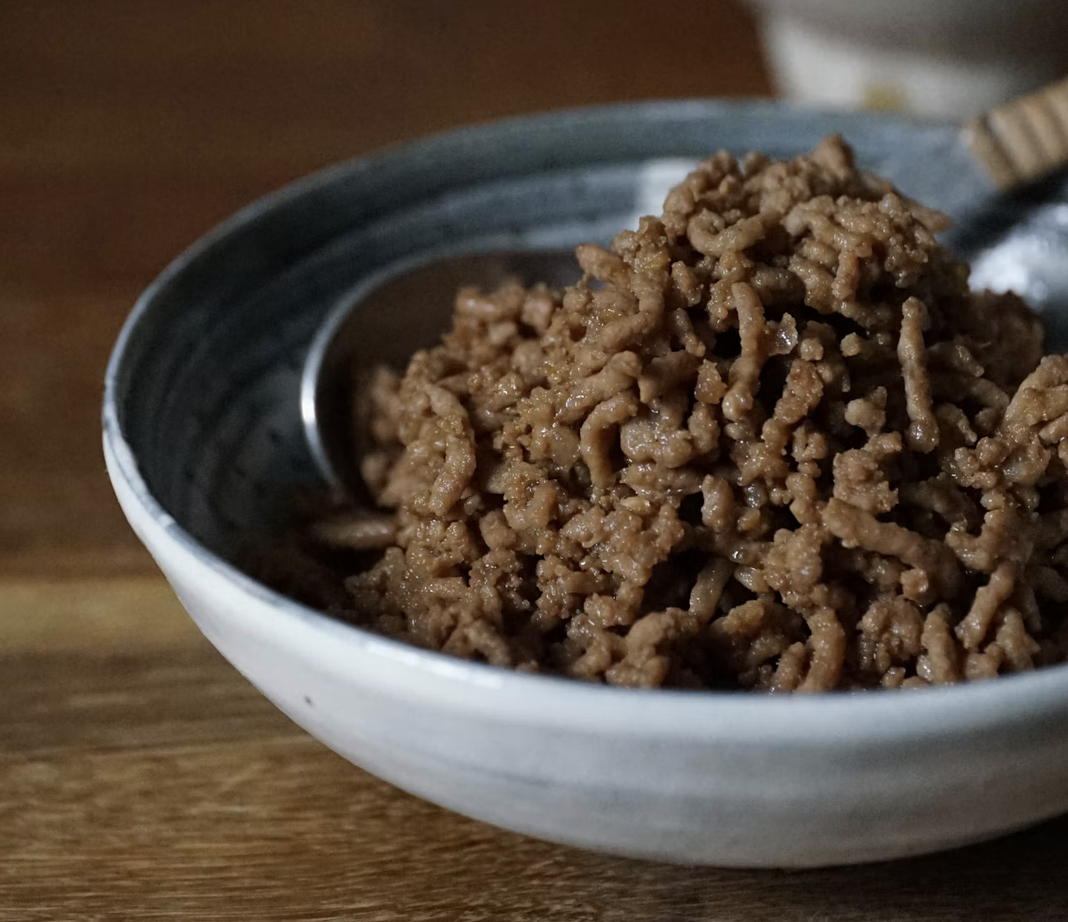
meat from a cow that has been processed and cut into the shape of countless thin noodles
a patty that is made of the meat of definition 1
🇺🇸 AMERICAN ENGLISH
In American English, this noun typically means:
a patty that is made from the meat of a cow, which has been processed and cut into the shape of countless thin noodles
COMPARISON
In Canadian English, the term, “hamburger,” is more generalized, so it is common to hear Canadians say that they are putting hamburger in a stew, in tomato sauce, or on rice, as well as between two pieces of bread to make a particular type of sandwich.
In American English, however, “hamburger” is more specific; it is that particular type of sandwich: a beef patty that is often grilled and placed between two pieces of bread, accompanied by various toppings, such as lettuce, tomato, and cheese, as well as as condiments or sauces (e.g., mustard, ketchup, mayonnaise, etc.).
To refer to the type of processed meat that is used to create the beef patty in an American hamburger, American English speakers typically say “ground beef.” This term is equally utilized and accepted in Canadian English as a contextual synonym of “hamburger,” meaning Canadians may also say “ground beef” to refer to the type of meat used in a beef patty.
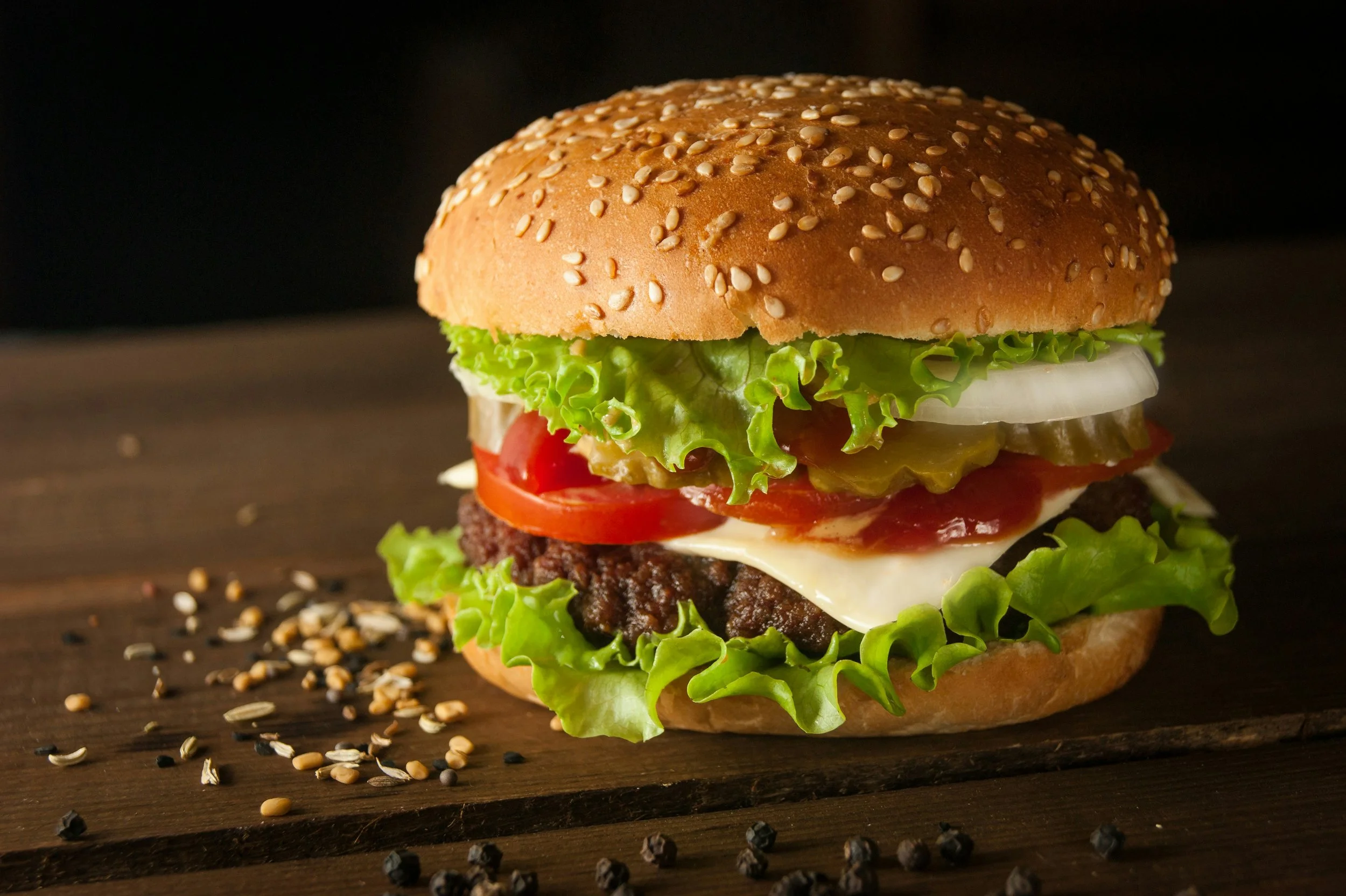
“Hamburger (US/CA)” image credited to Ilya Mashkov on Unsplash.
CHICKEN BURGER
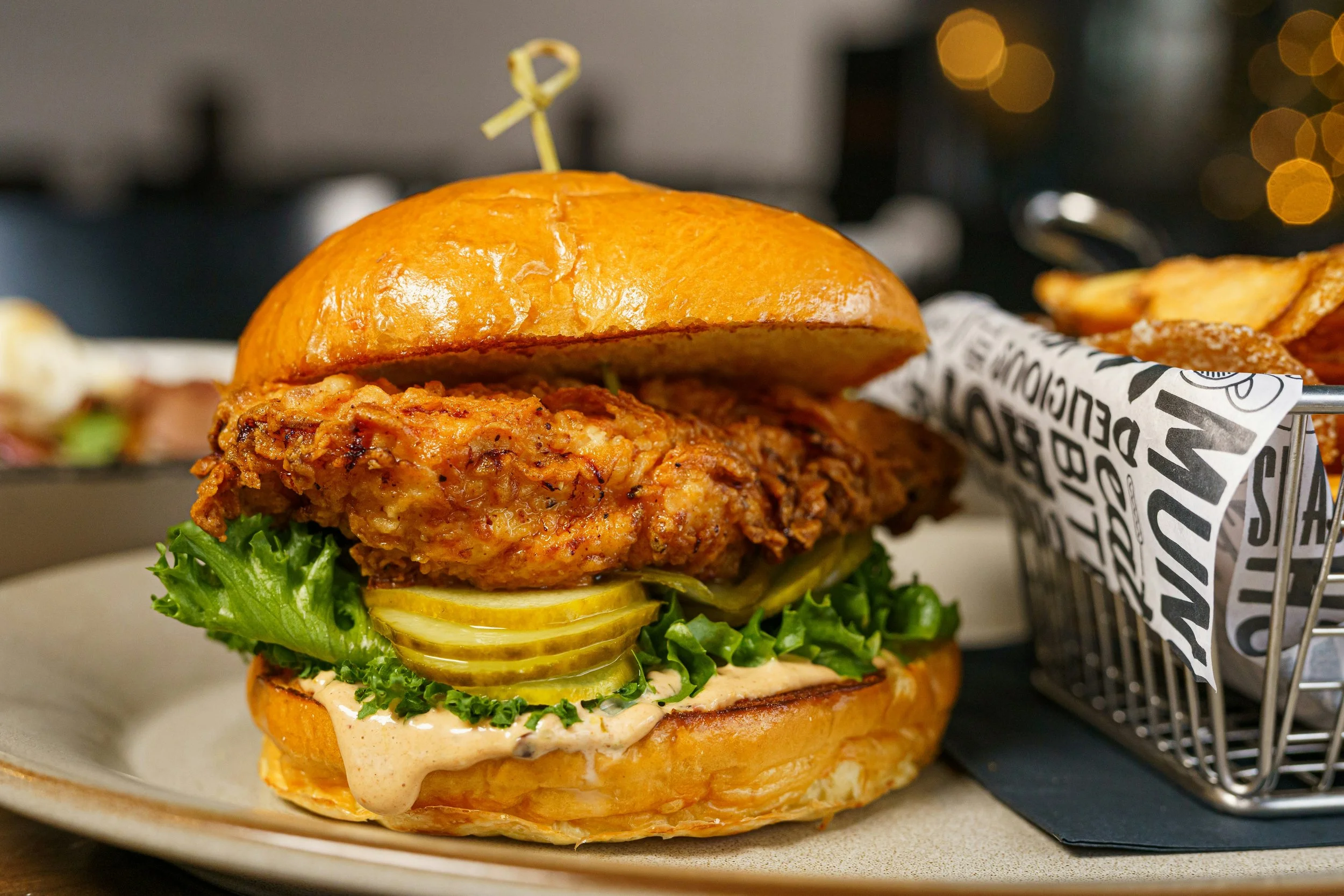
“Chicken Burger (CA)” image credited to Ilya Mashkov on Unsplash.
🇨🇦 CANADIAN ENGLISH
In Canadian English, this term typically means:
a type of sandwich that consists of chicken and various toppings, such as lettuce, tomato, and cheese, as well as condiments or sauces (e.g., mustard, ketchup, mayonnaise, etc.)
NOTE
This is considered a meat alternative to a hamburger.
🇺🇸 AMERICAN ENGLISH
In American English, the term “chicken burger” is not commonly used. Instead, this type of meal is generally called a “chicken sandwich” in the USA.
COMPARISON
In Canadian English, however, the term, “chicken sandwich,” usually refers to a similar concept, but with sliced bread instead of buns (see section below) and sometimes with cured chicken meat known as “lunch meat” instead of a piece of fried chicken, grilled chicken breast, etc.
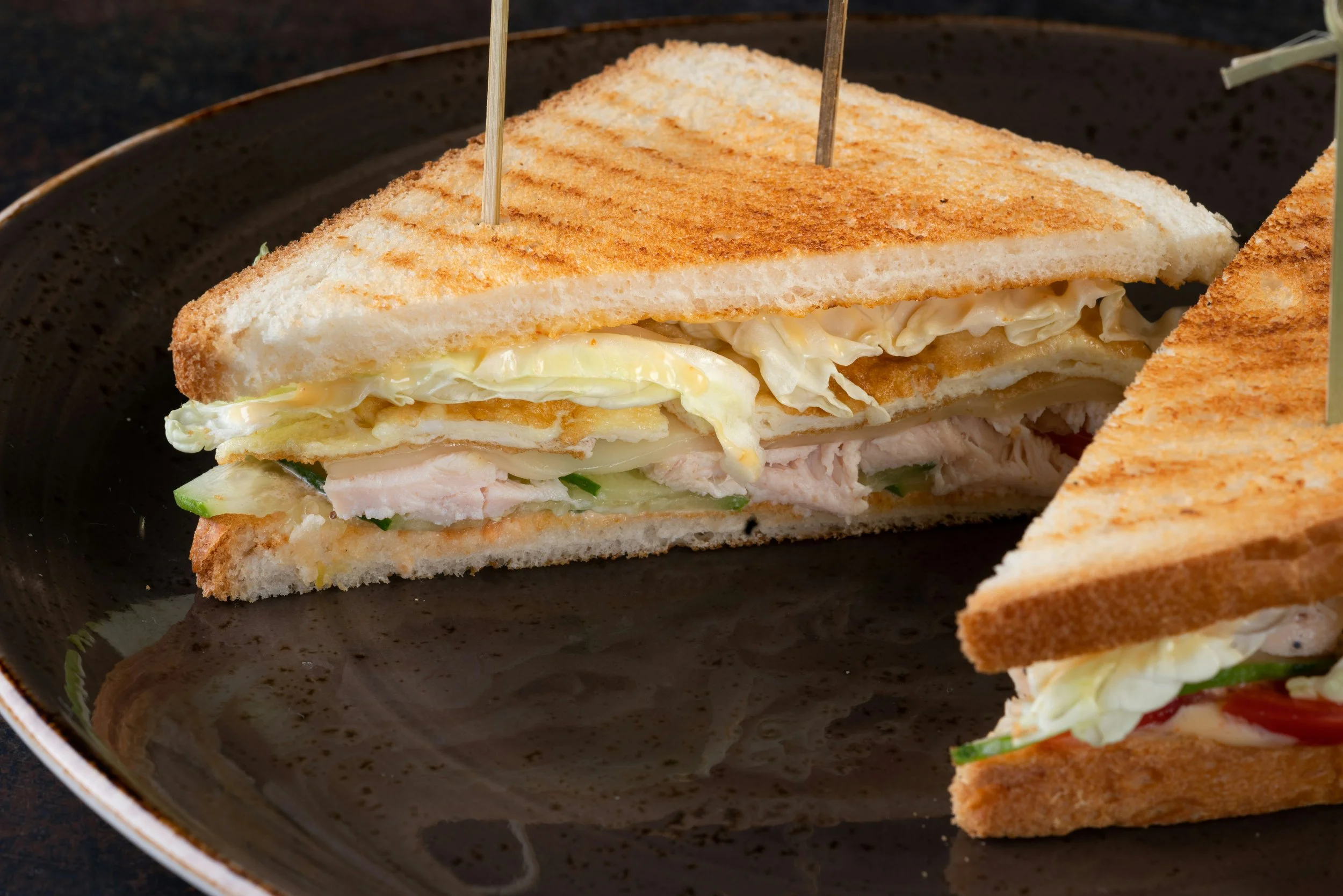
“Chicken Sandwich (CA)” image credited to David Foodphototasty on Unsplash.
BUN

“Buns (CA)” image credited to Jem Sahagun on Unsplash.
🇨🇦 CANADIAN ENGLISH
In Canadian English, this noun typically means:
an individual-sized loaf of bread, which is generally small (the size of the palm of one’s hand or smaller) and is rounded like a ball or oblong sphere
NOTE
In Canada, “buns” can be used as a snack, a meal side, the bread used for a sandwich, hamburger patty, or hotdog.
🇺🇸 AMERICAN ENGLISH
In American English, this noun typically means:
the specific type of bread that is used to contain the beef patty in a hamburger or the meat of a hotdog
COMPARISON
In Canada, the word, “bun,” has a more general meaning compared to the American English definition.
To refer to the Canadian definition of “bun,” American English prefers to use the terms, “roll” or “bread roll,” though “bun” is sometimes used in select US regions.
This means that some common recipes for bread have different names in Canada versus in the United States. For example, an individual-sized bread eaten as a side during the evening meal is often called a “bun” in Canada, but a “dinner roll” in the USA; and a dessert bread made of circular layers of butter, brown sugar and cinnamon is often called a “cinnamon bun” in Canada, but more commonly a “cinnamon roll” in the USA.
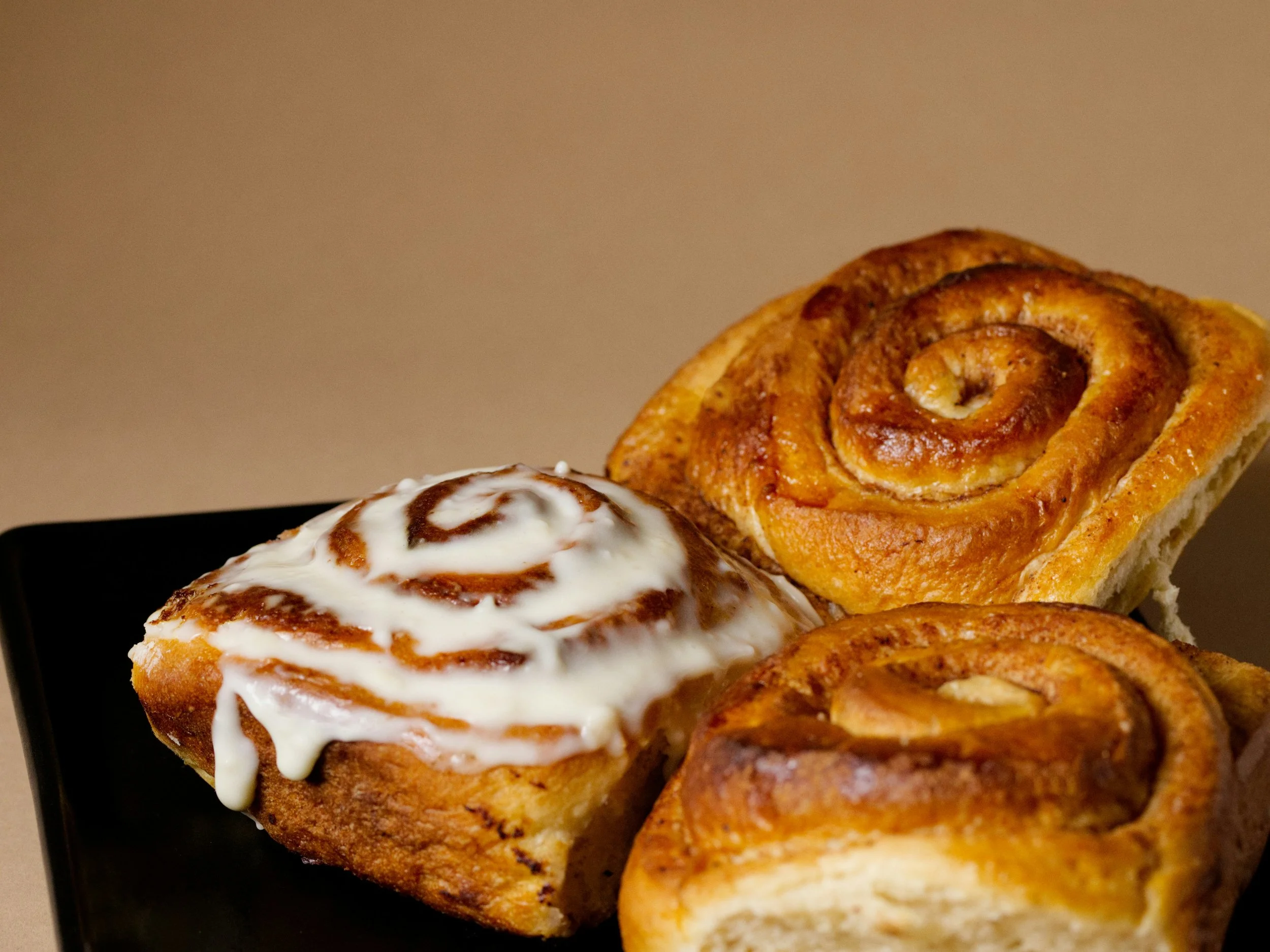
“Cinnamon Buns (CA)” image credited to David Eduardo Lopez Diaz on Unsplash.
BANNOCK
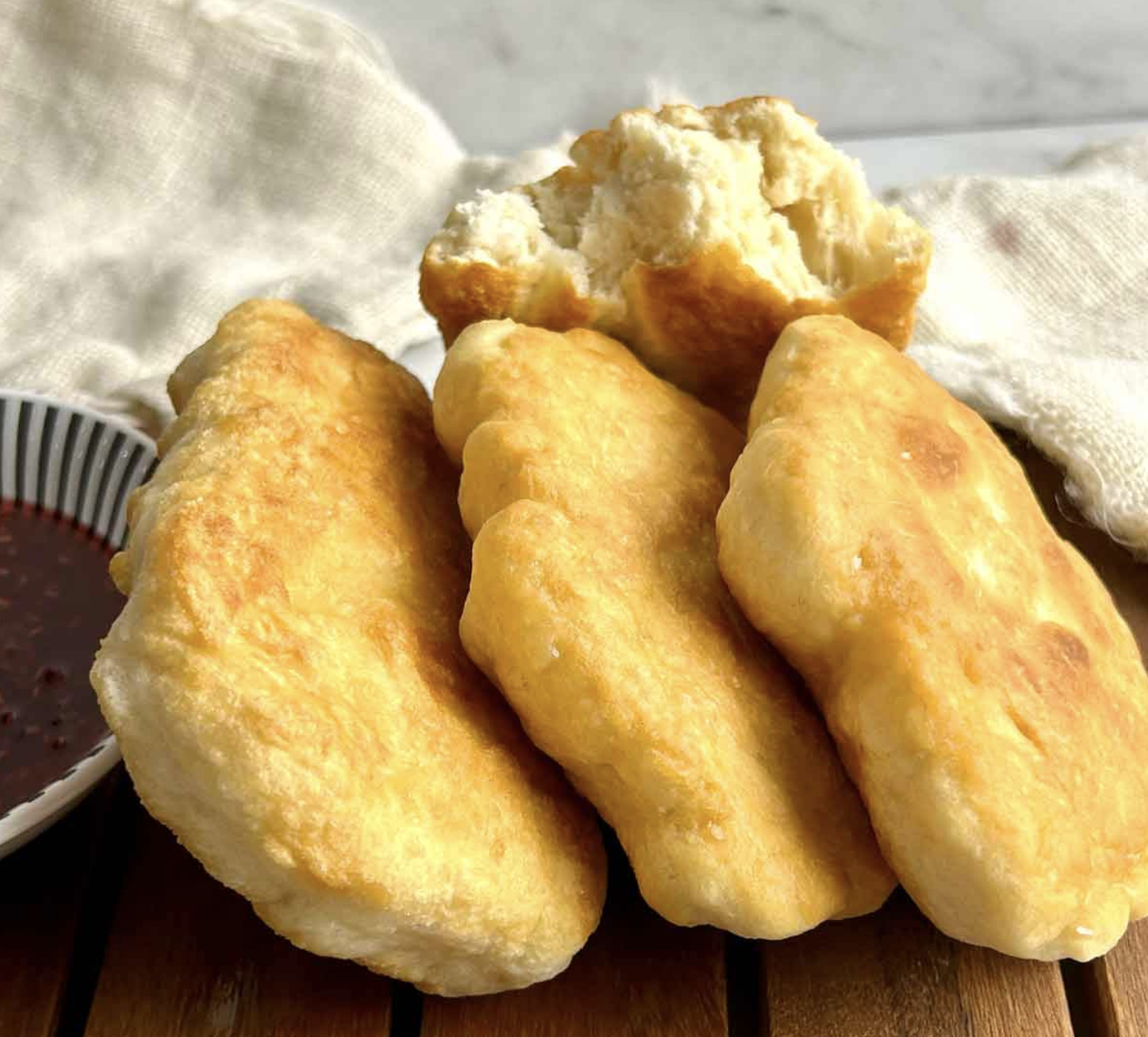
“Fried Bannock (CA)” image credited to Feed Grump.
🇨🇦 CANADIAN ENGLISH
In Canadian English, this noun typically means:
an Indigenous-style bread that can be eaten as a savoury or sweet food and can be prepared in a variety of ways: fried, deep-fried, roasted, grilled, baked, etc.
🇺🇸 AMERICAN ENGLISH
In American English, the concept of bannock is generally referred to as “frybread.”
COMPARISON
Whether “bannock” or “frybread,” Indigenous communities across North America, including non-Indigenous Canadians and Americans, generally consume this food in a number of ways: as a snack or meal on its own; as a bun (CA) or dinner roll (US) served with butter, pickles, or jam; sliced into two pieces in order to contain the toppings in a sandwich, hamburger, or even a hotdog; or as a dessert, similar to a doughnut.
BROWN BREAD
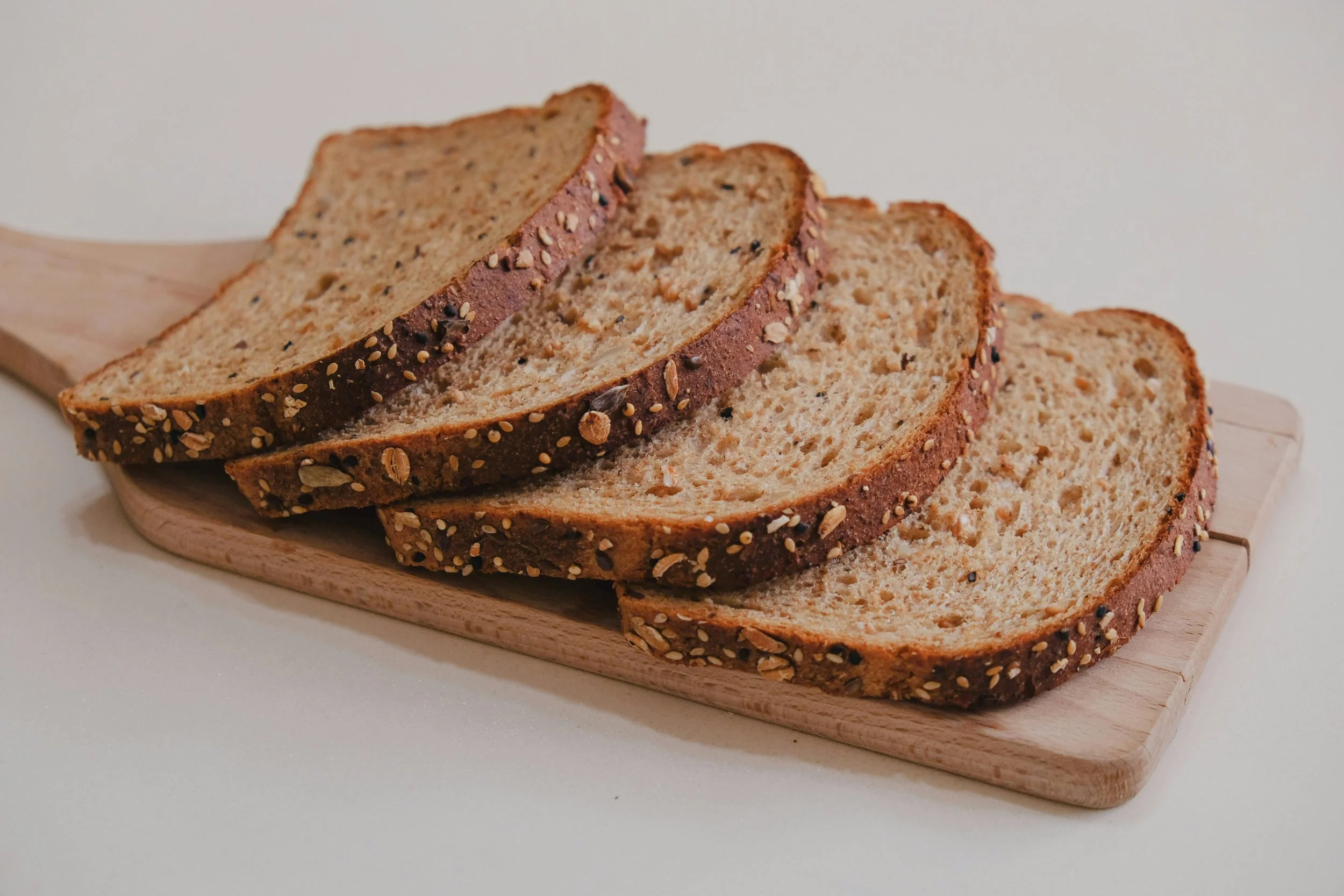
“Brown Bread (CA)” image credited to Photo by Young Shih on Unsplash.
🇨🇦 CANADIAN ENGLISH
In Canadian English, this term typically means:
bread that is made from flour that is processed from whole grains (including a grain’s entire germ, endosperm, bran, etc.)
NOTE
This type of bread is typically medium-dark in colour and contains more natural nutrients, compared to other varieties.
🇺🇸 AMERICAN ENGLISH
In American English, the term, “brown bread,” is not generally used. Instead, this type of bread is commonly called, “whole wheat bread.”
COMPARISON
"Whole wheat bread” is used interchangeably with “brown bread” in Canadian English.
In American English, however, “brown bread” is generally not understood.