PROFILE: Ontario
– C1-C2 (advanced) –
Practice Your Listening Comprehension
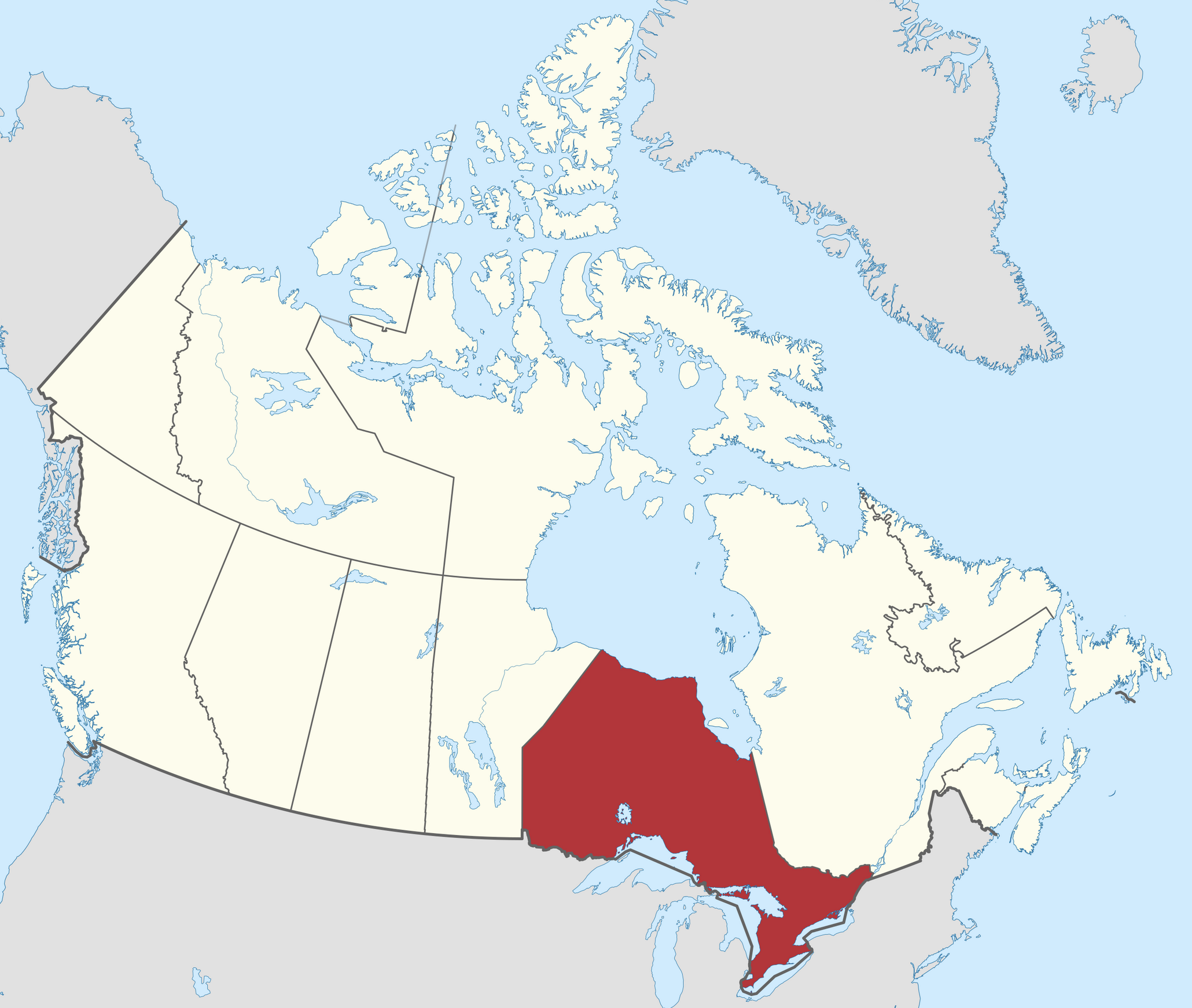
“Ontario, Canada” image courtesy of MapGrid - Own work, CC BY-SA 4.0, Wikimedia Commons.
Practice Your Reading Comprehension
NAME
Ontario is a province of Canada that finds its origin, at least in terms of its name, in a variety of Indigenous languages: from Huron-Wyandot, transliterated to “great lake,” to Iroquoian to mean “beautiful” or “sparkling water.” Appearance of this moniker was first recorded in the early-to-mid 17th century when Indigenous groups would refer to the northern shores of the easternmost points of the Great Lakes, the five sea-like-in-scope bodies of water that separate Ontario from its southern sibling that is the United States of America. These include, from left to right: Lake Superior, Lake Michigan, Lake Huron, Lake Erie, and Lake Ontario.
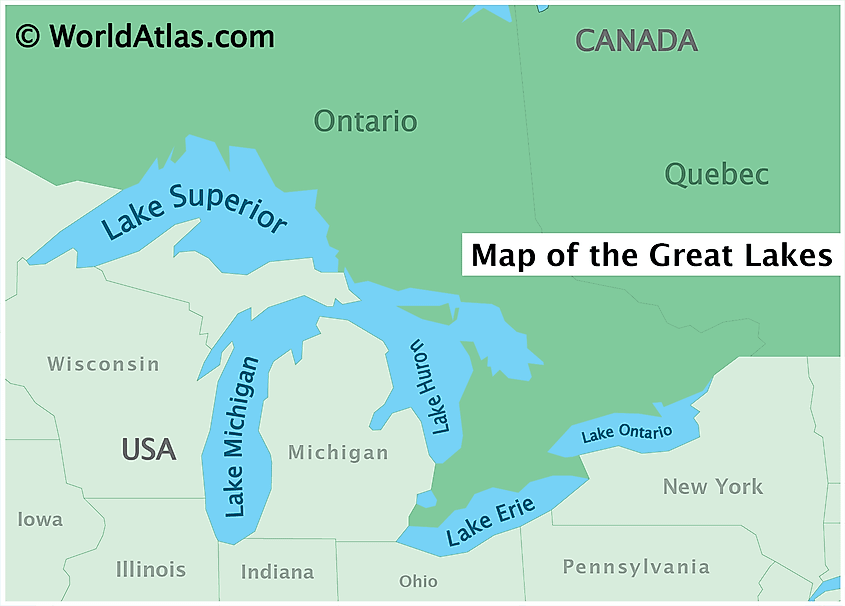
“Map of the Great Lakes” image credited to WorldAtlas.com.
Beyond the official name of the province, Ontario has, over the years, received many additional names, which have been socially used by both those born in the area and those from across provincial borders. Nationally speaking, Ontario is known as one half of the region of Central Canada, a name which speaks less of its geographic location and more of its economic and political power in the country; statistically 38.9% of the nation’s population resides in Ontario, contributing to a bulk sum of the country’s economy. It is also where the national capital lies, meaning it is the primary location of federal government business. While this name (Central Canada) is officially used by the Canadian government, it is not typically used by the average Canadian resident, especially if this individual does not work in education, journalism, law, or politics; in fact, the name “Central Canada” is frequently met by non-Ontarians and non-Quebeckers with derision, where the general consensus is that it is a disrespectful term that speaks to the disproportionate representation of Canadians in Parliament, as well as in local and international media. Politics aside, Ontario carries with it a bevy of nicknames. Here are but two: the “Heartland Province,” an affectionate–though somewhat old-fashioned–term for Ontario’s role in the nation; and “a place that is ‘Yours to Discover’” (À vous de découvrir), which is the province’s official slogan, describing the vast land of Ontario, which is available for all to explore, and the potential opportunities found in the area, whether personal, professional, or otherwise.
GENERAL INTRODUCTION
Speaking of vast land, Ontario is, indeed, a large land mass. With a size of 1,076,395 km2 (415,598 sq mi), the province is nearly five times the size of the United Kingdom. With dimensions like this, it is no wonder that Ontario reaches several borders either directly through land or indirectly via bodies of water: two Canadian provinces (Manitoba, Quebec), one Canadian territory (Nunavut) and eight American states (Minnesota, Wisconsin, Illinois, Indiana, Michigan, Ohio, Pennsylvania, New York).
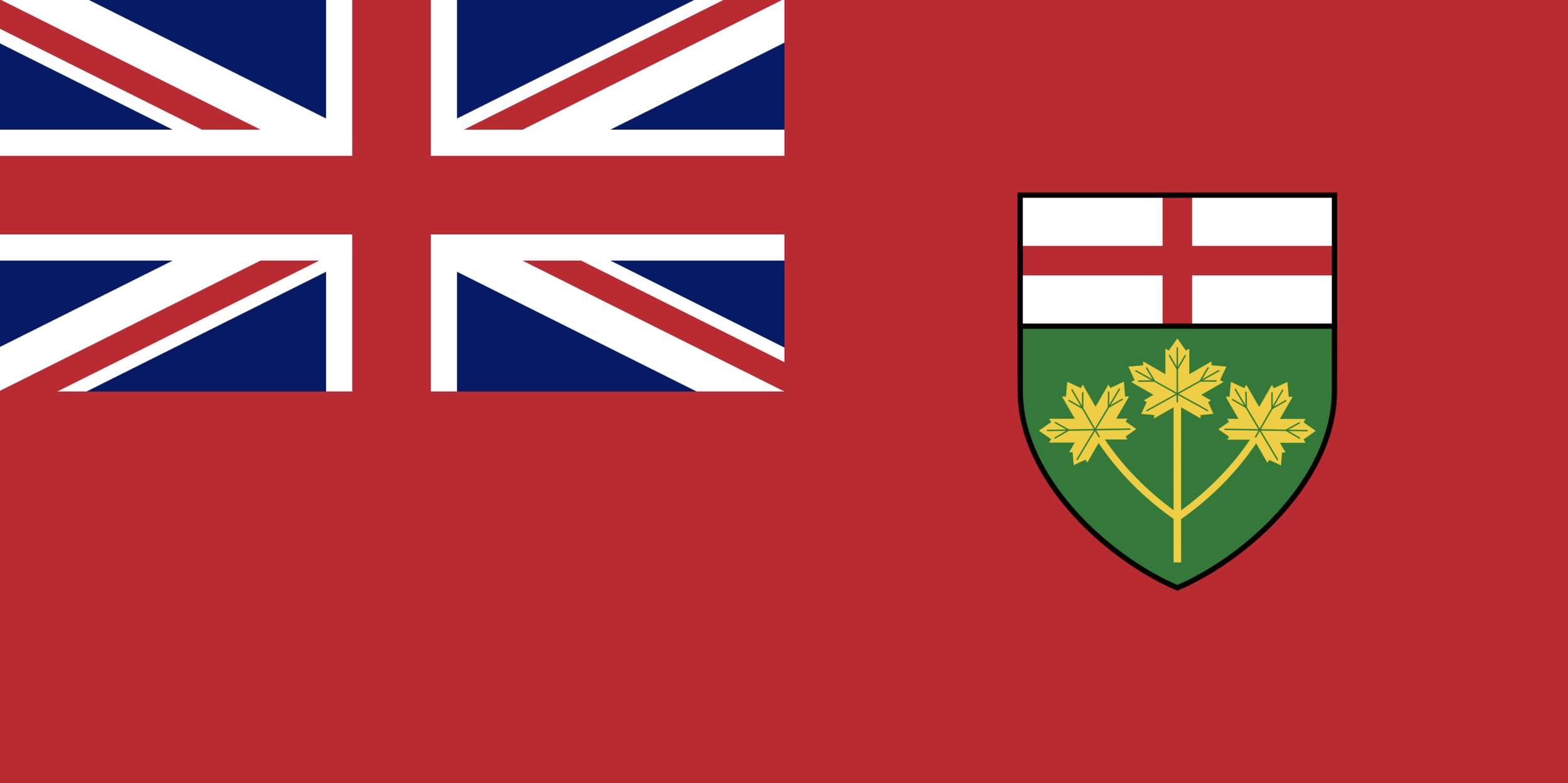
“Flag of Ontario” image courtesy of Kooma - Government of Ontario, About Ontario: Emblems and Symbols (bad link), Public Domain, Wikimedia Commons.
NATURE
With such extensive land mass, Ontario boasts an impressive landscape that is divided into vastly different ecosystems.
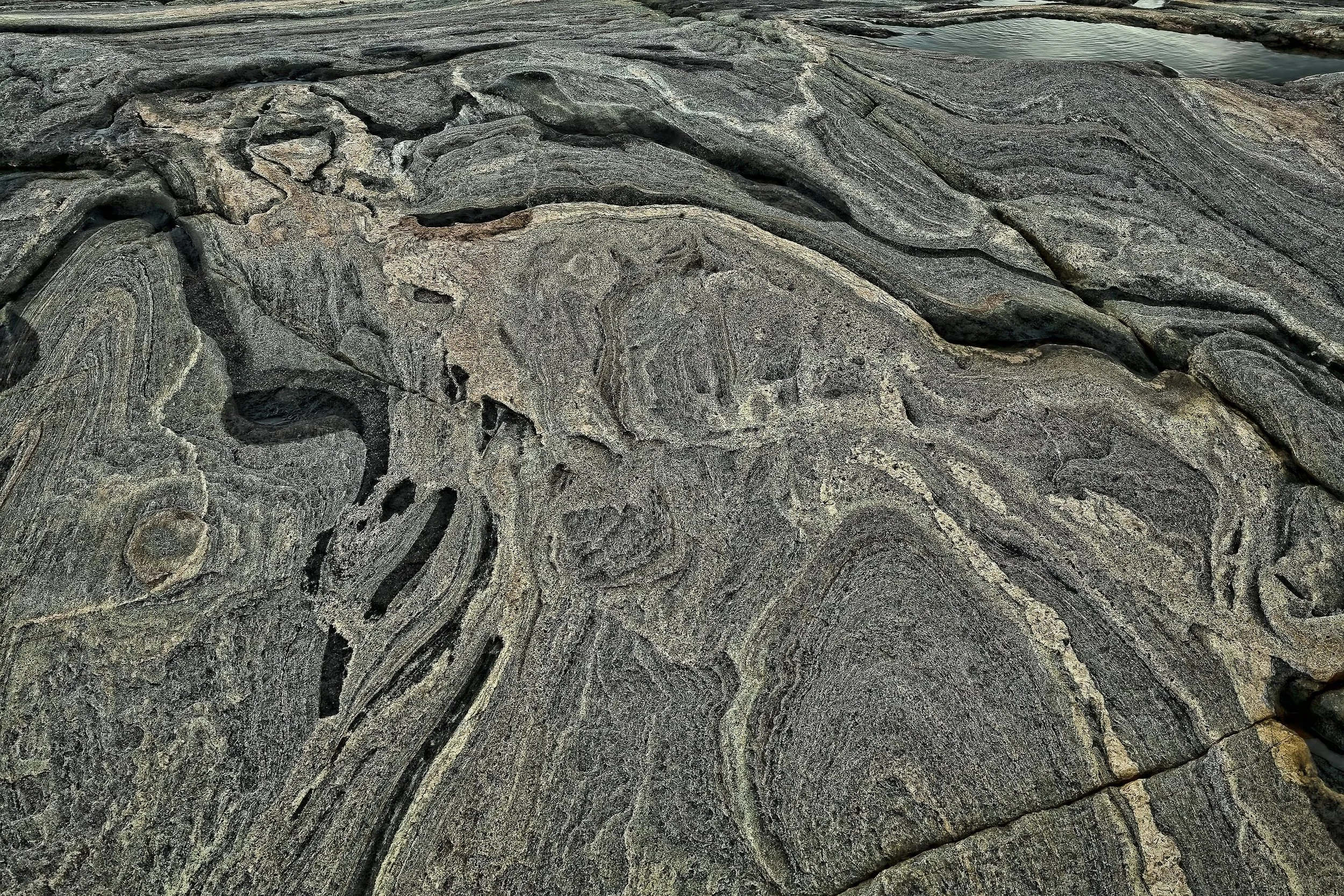
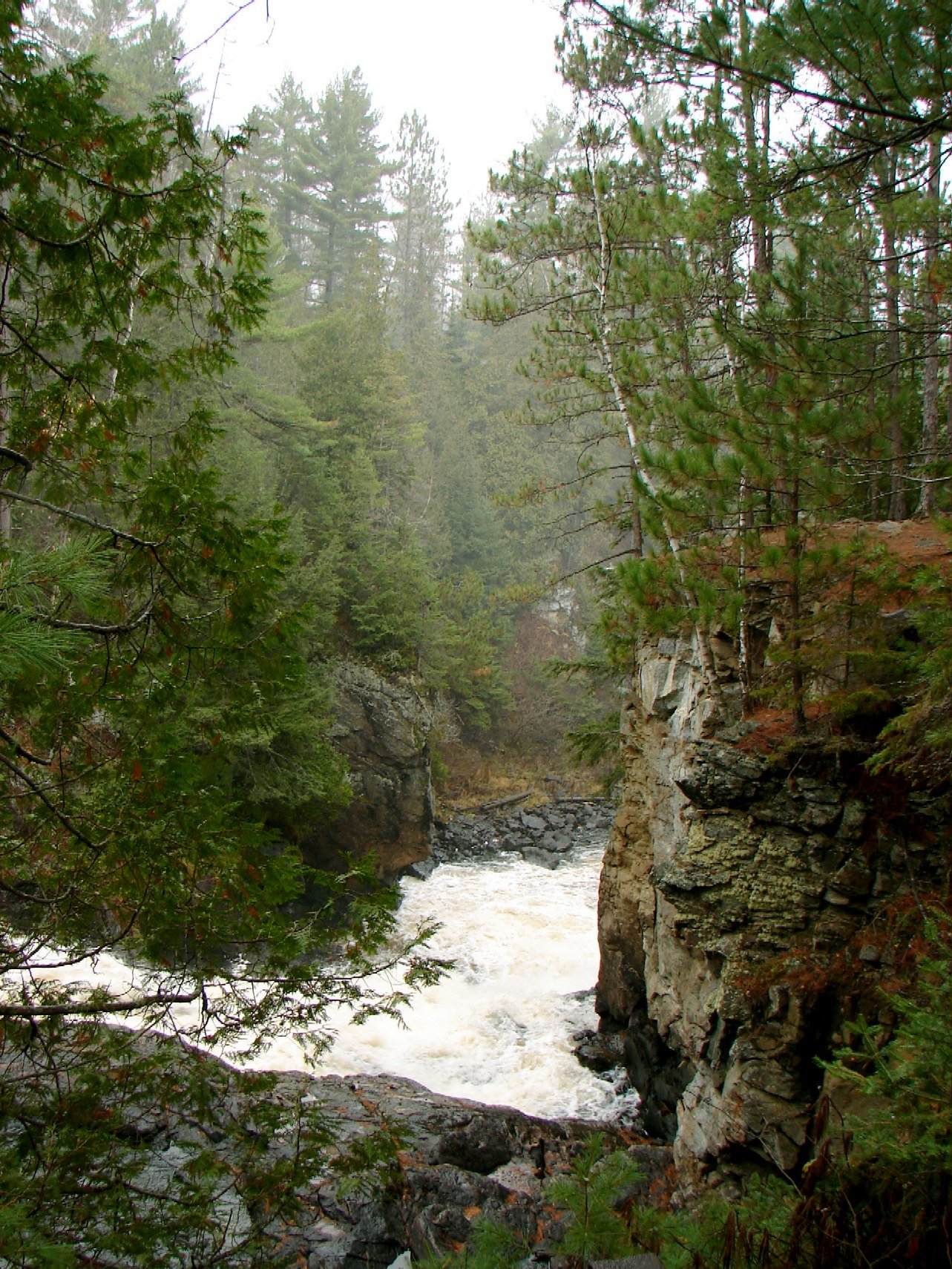
Northern Ontario, which covers 87% of the province’s land, is a largely infertile region due to its high concentration of igneous and metamorphic rock belonging to the Canadian Shield. Such environment prohibits the feasible growth of agriculture, but the area is not completely desolate. The stone is covered in part by rough forests and mineral-rich lakes (over 250,000) and swamps that provide the otherwise dry and grey land with both hydration and beauty. Much of this hydration is fed by the waters of the Hudson Bay, a mammoth-sized body of agua nourished by the Arctic and North Atlantic Oceans that creates the province’s northern coastline.
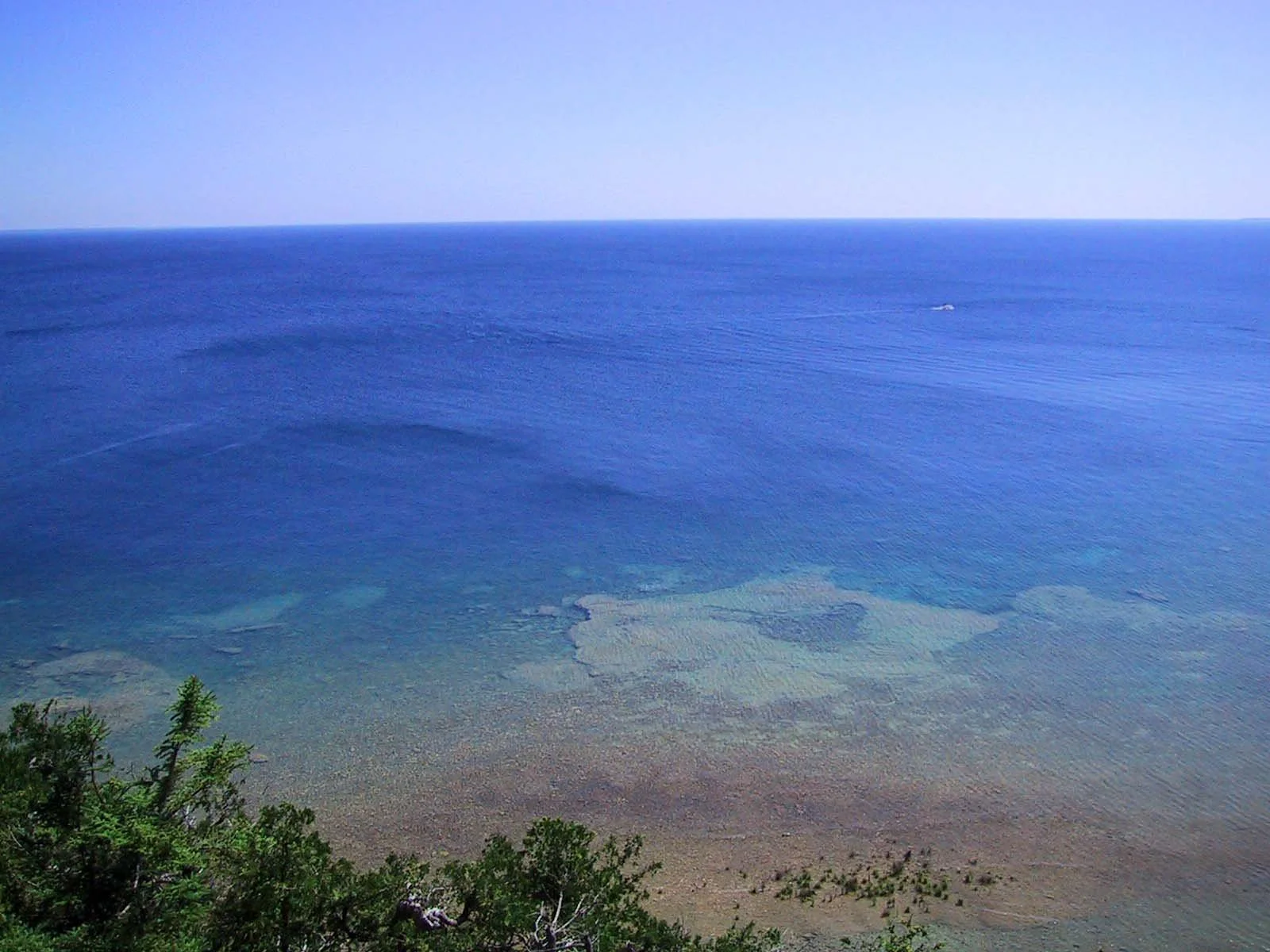
Southern Ontario comprises the remaining 13% of the provincial land division, yet due to its less hostile nature 94% of the province’s population inhabit this sub-region. These Ontarians surround themselves with crop-filled fields, hugged by Carolinian forest, sea-like lakes and lowlands, an internationally-acclaimed escarpment, and a characteristic seaway to the North Atlantic Ocean.
PLANTS
With such range of natural beauty, it is no wonder that the eye can feast on boundless flora and fauna in Ontario.
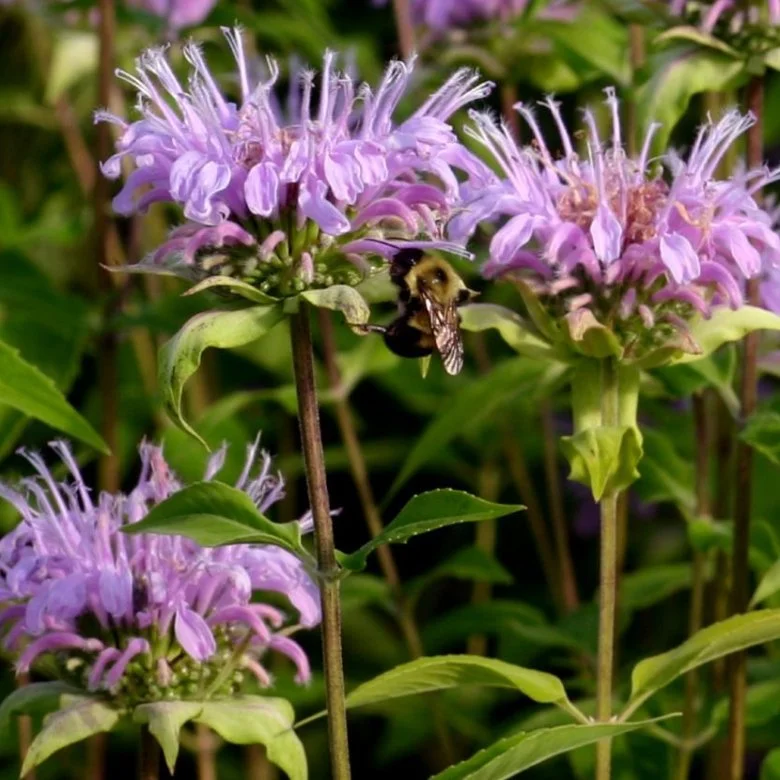
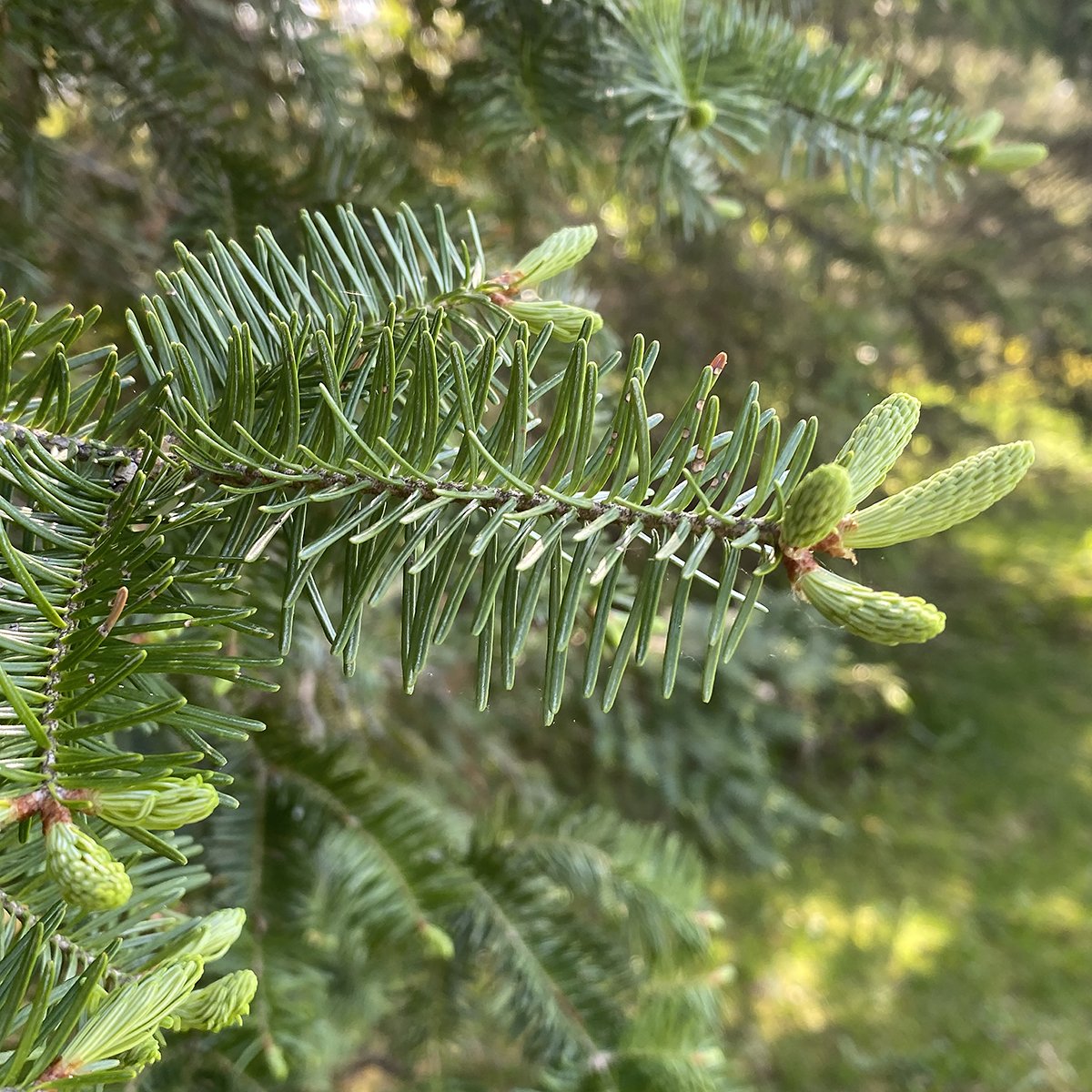
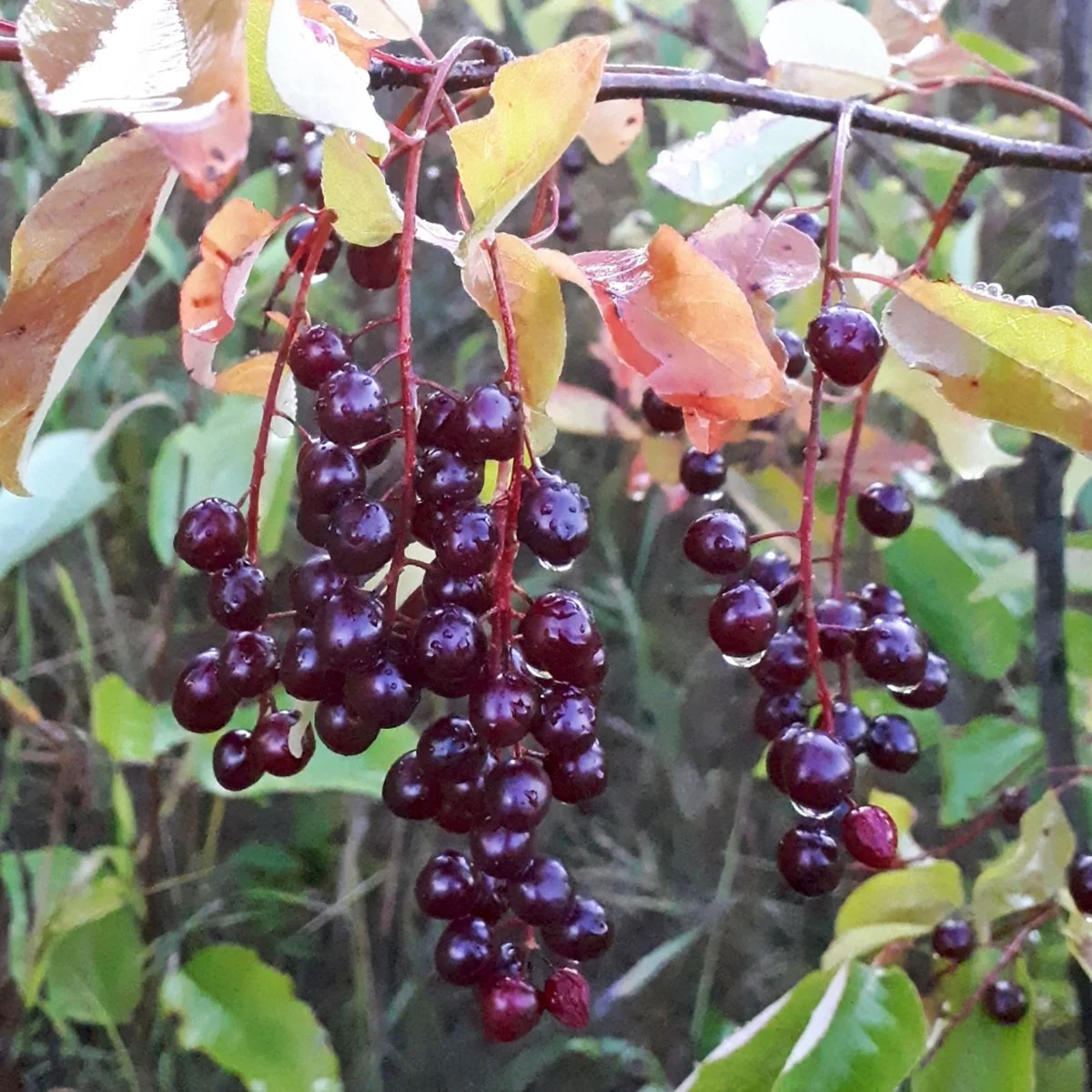
Decorating its beds and gardens, fields, forestial pockets, and mountain cracks are countless colourful flower species: sunny Brown-Eyed Susans, pinkish-purple Wild Bergamot, softly gradiented Smooth Roses, and creamy white Downy Serviceberries. One would be remiss to not equally mention the earthy side of the province’s colour spectrum, represented, of course, by its natural foliage and arbour: Sumac bushes, American Elms, Balsam Firs and Poplars, Black Maples and Oaks, Butternuts, Chokecherries, Cottonwoods, various cedar, spruce and pine species, and so much more.
WILDLIFE
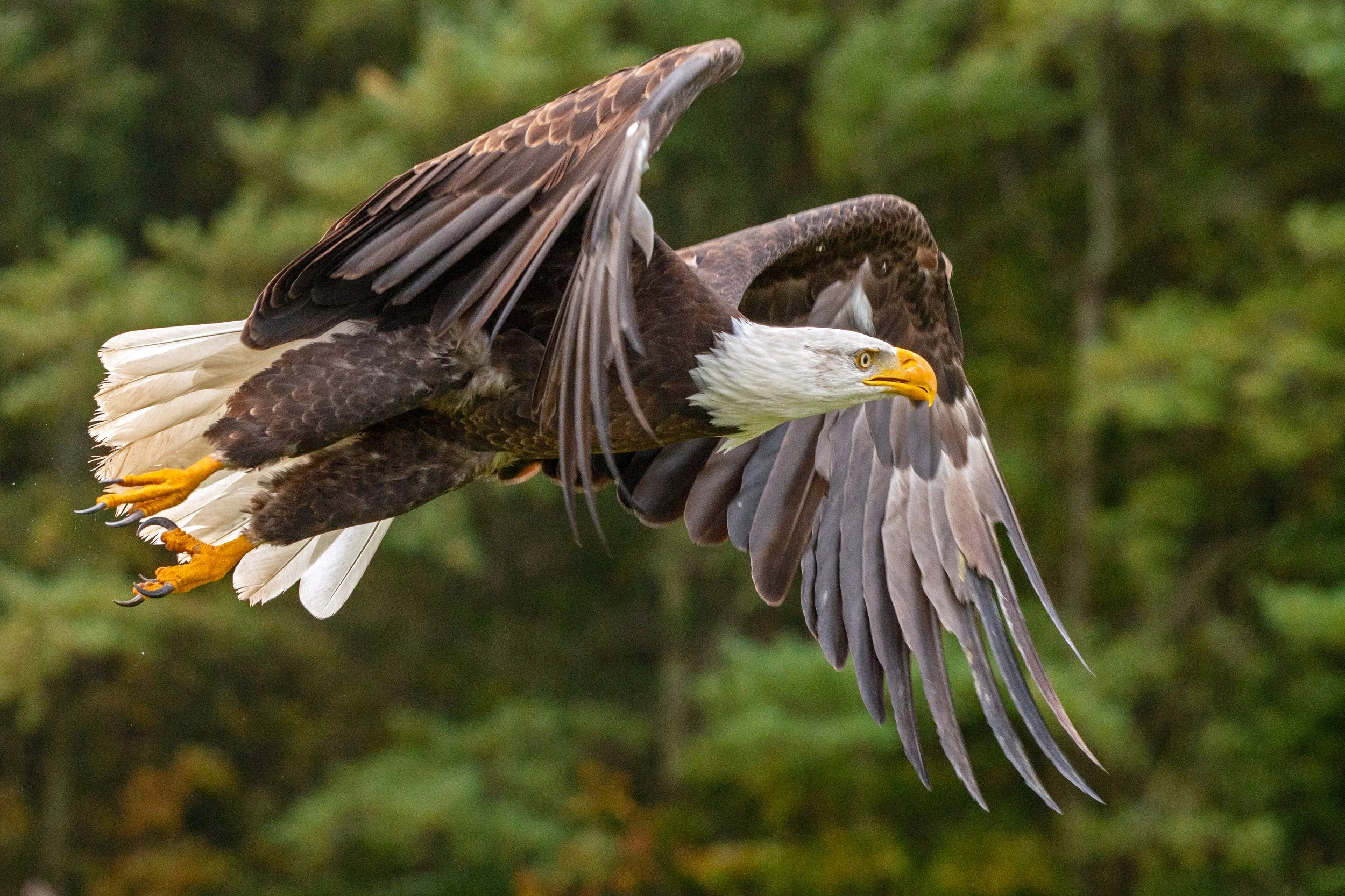
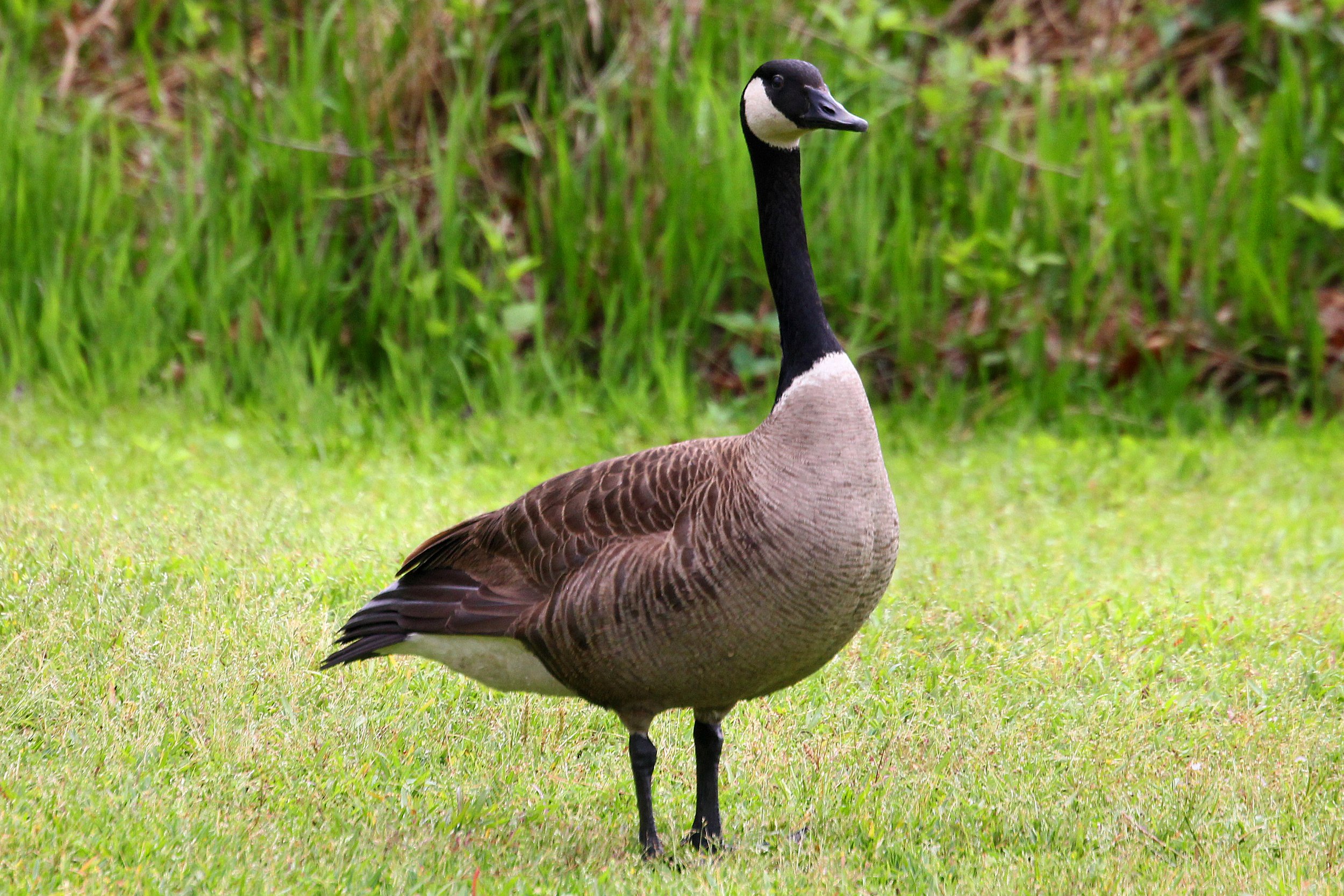
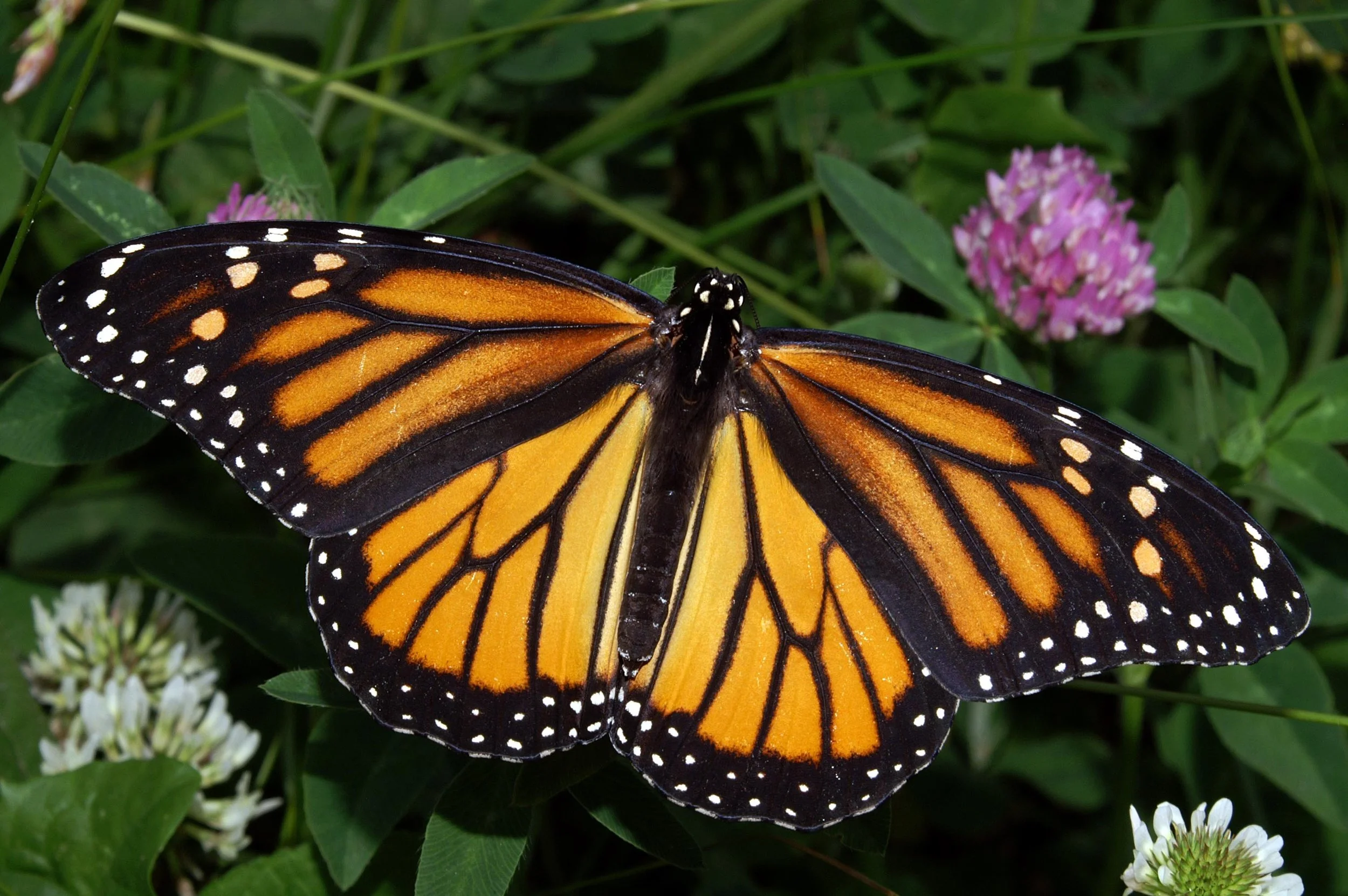
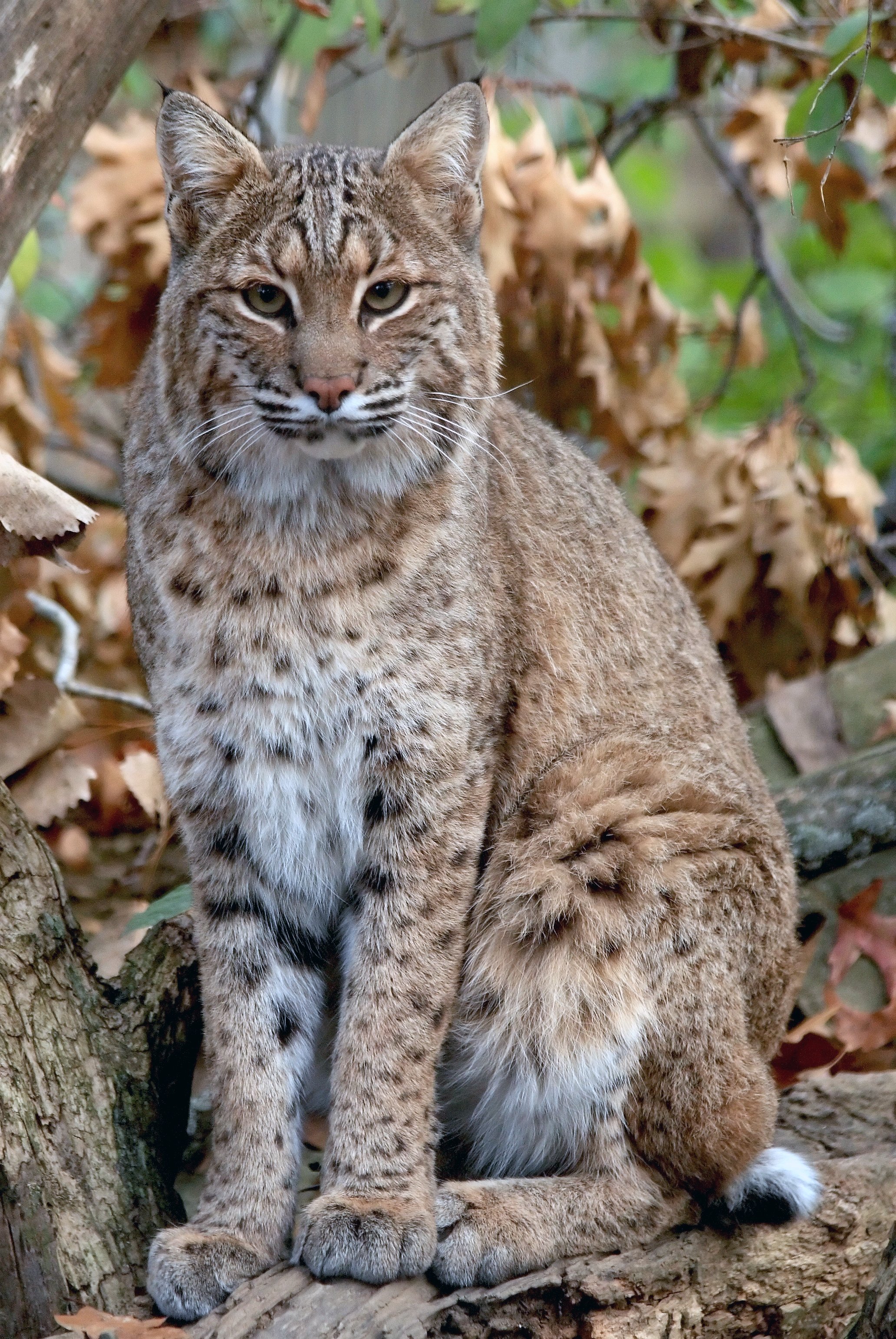
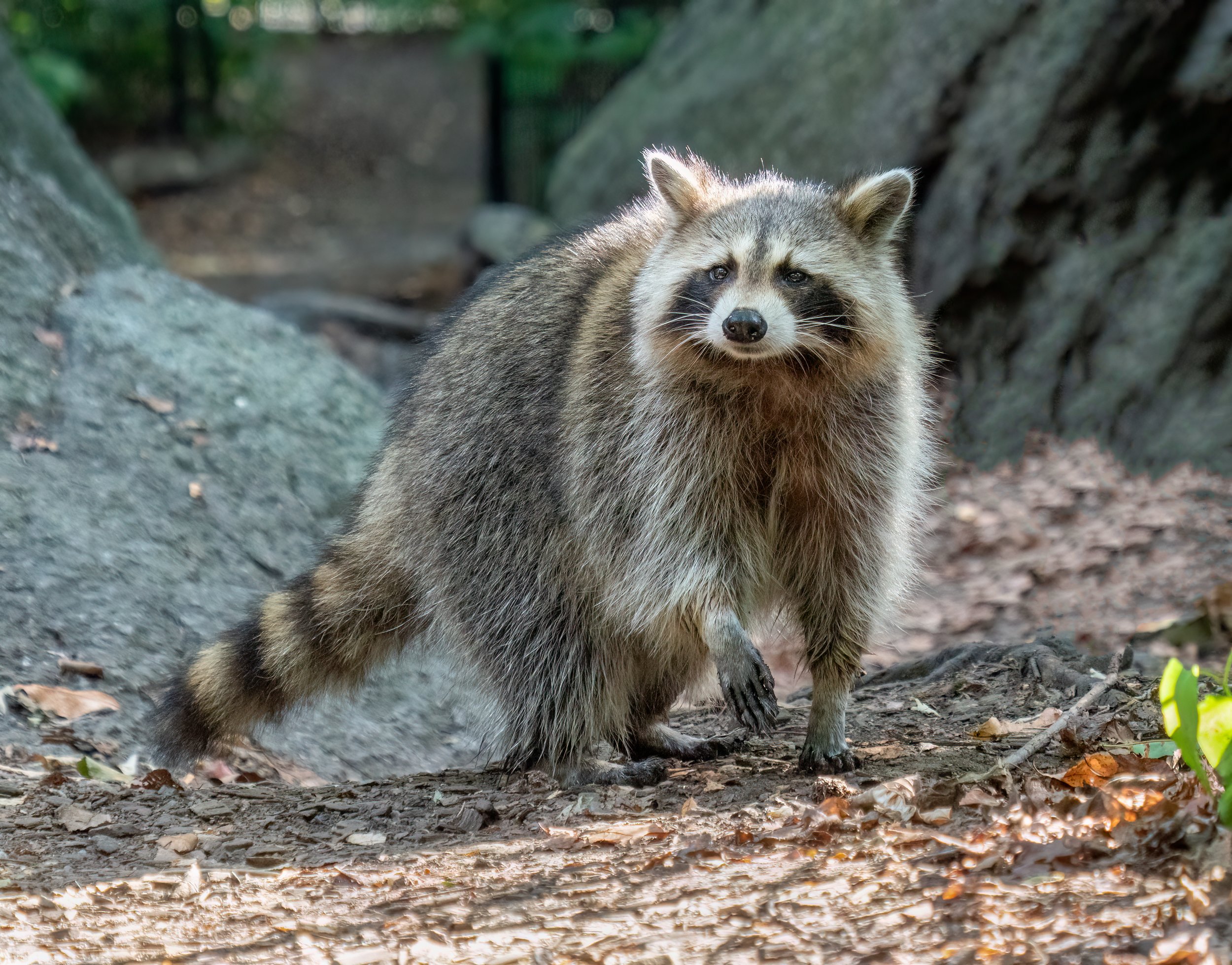
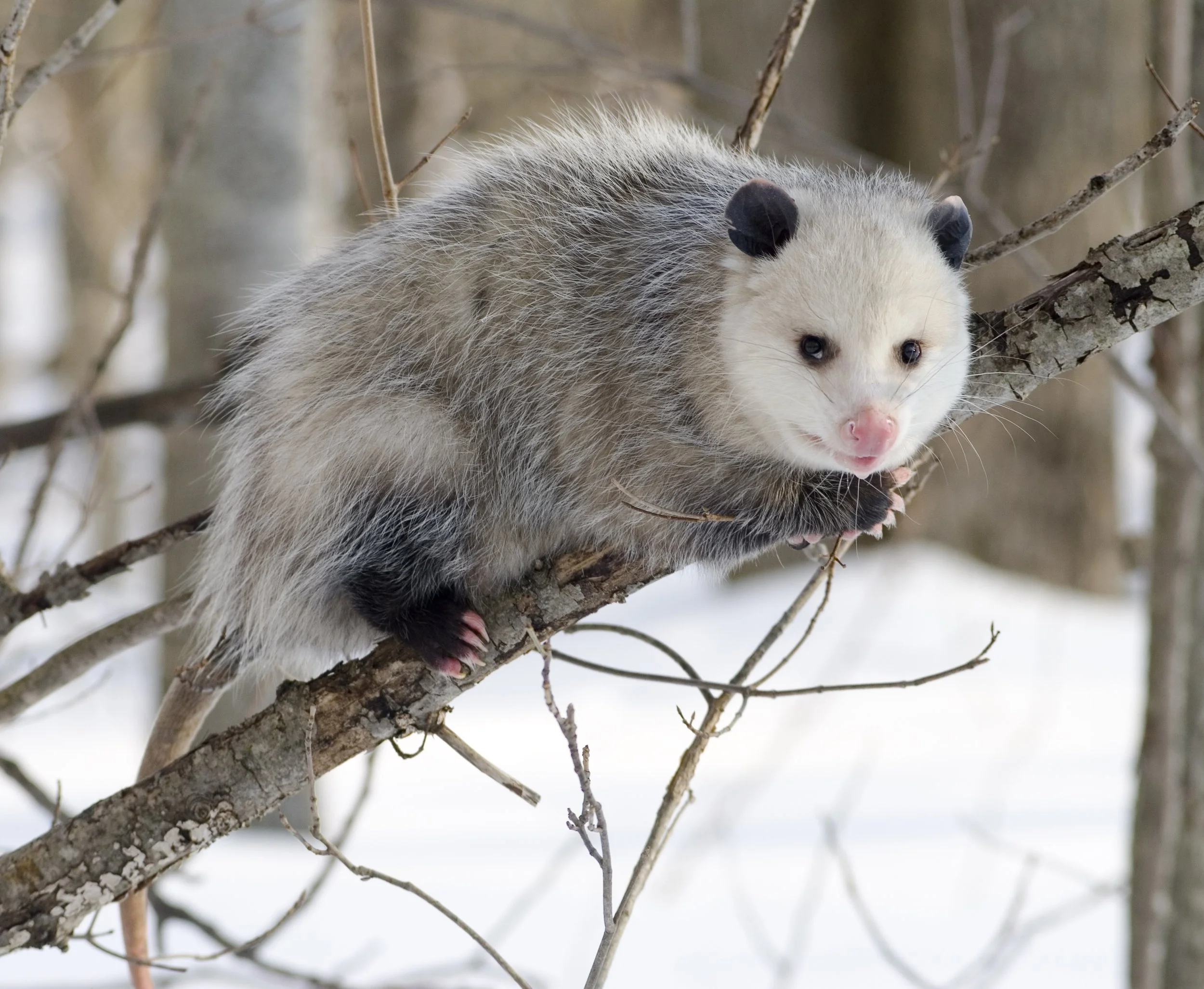
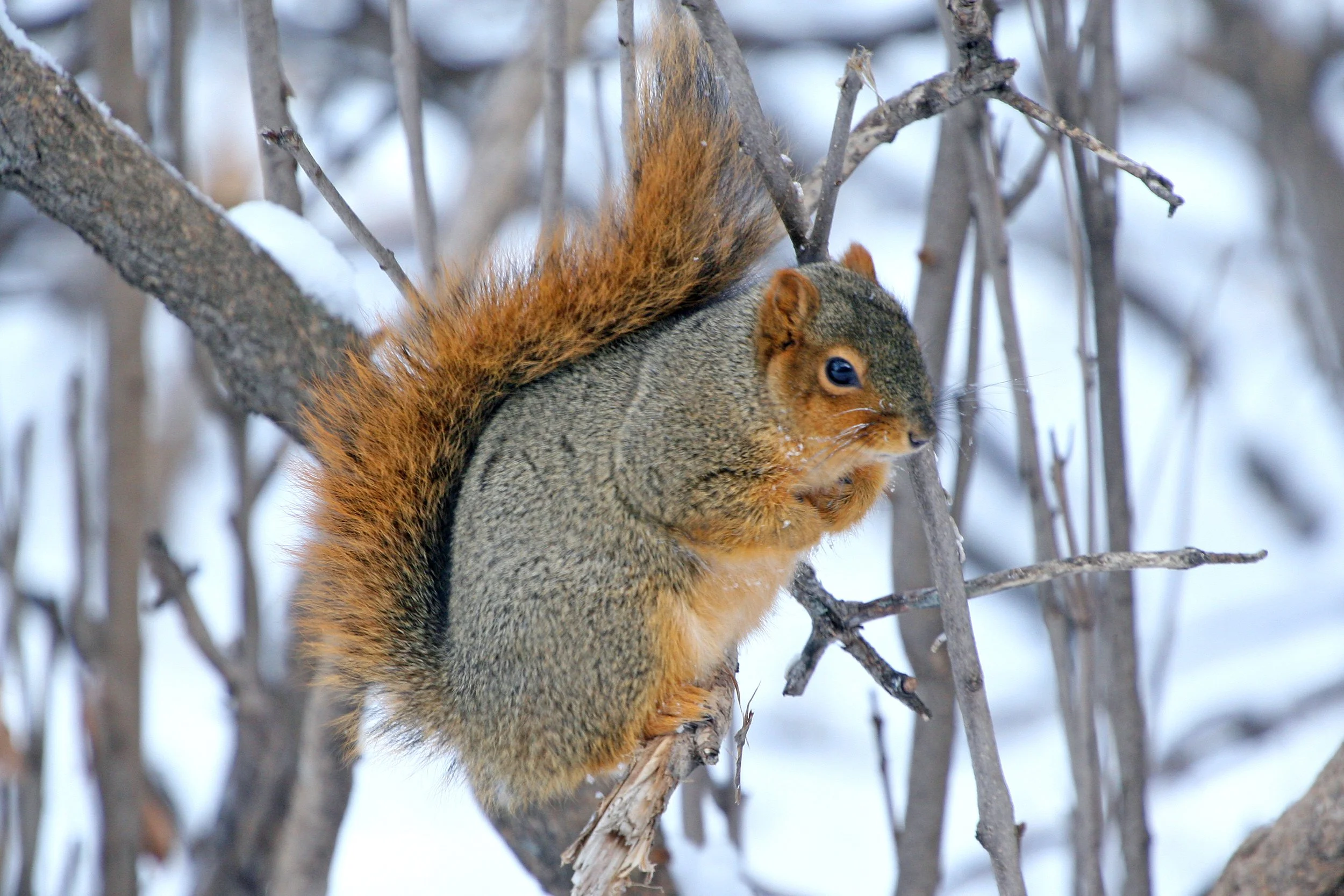
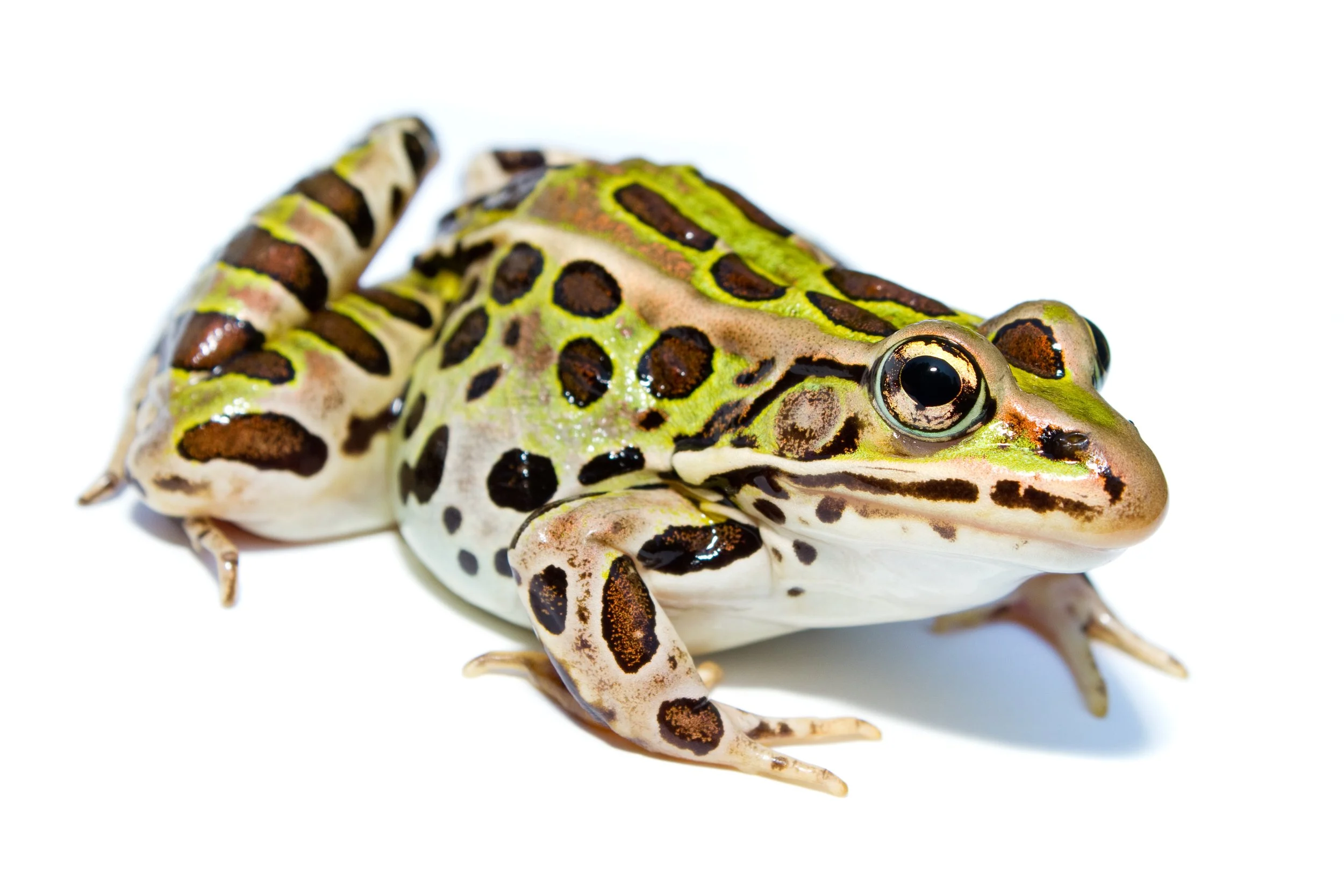
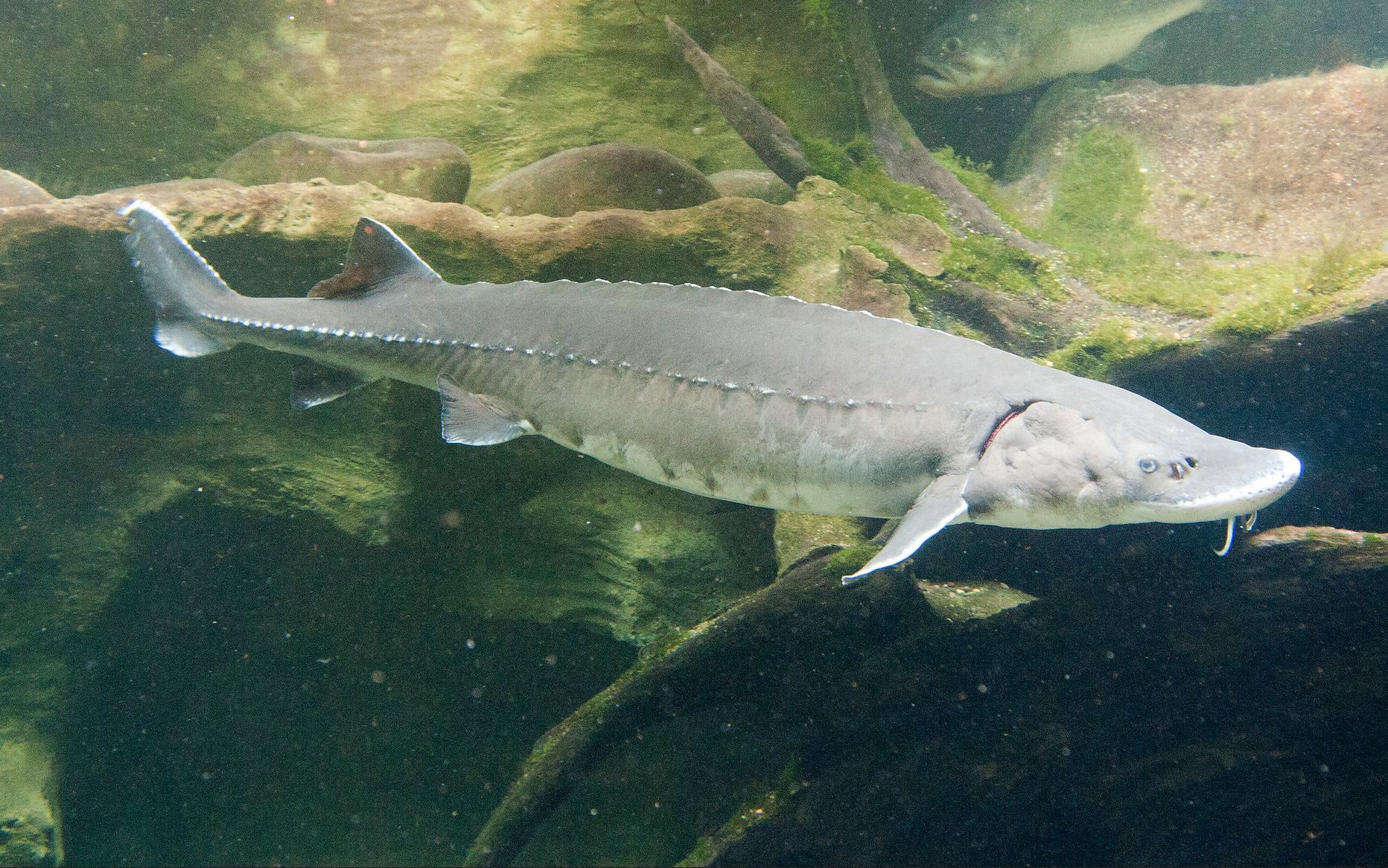
Looking to fauna, wildlife in the province of Ontario contains equal diversity: Canada geese, turkey vultures, bald eagles, hawks, owls, cardinals, bats, monarch butterflies, fox squirrels, beavers, lake sturgeons, lampreys, frogs, opossums, raccoons, bobcats, wolverines, wolves, black bears, polar bears, caribou, deer, and so much more….
While there are many species currently inhabiting the land on which Ontario is situated, there are many animals living in the region that are at risk of extinction, which may affect how humans are legally allowed to engage with them, including in self-defence, if such an occasion arises. Being familiar with these species, as well as the regulations and laws for wild animal interactions could be helpful for both you and the animals’ safety.
CLIMATE
Ontario is a province divided into two general climates: a subarctic climate in its northernmost reaches and a humid-continental climate of varying degrees in its central, eastern, western, and southern zones. Each of these areas are influenced by four primary air masses travelling from the Arctic, the Prairies, the Gulf of Mexico, and the Atlantic Ocean.
In the north of Ontario, the Hudson Bay regulates much of the land’s temperatures, providing a cooler summer (average temperature of 25 °C (77 °F)) compared to most other Canadian regions at the same latitude. Due to a lack of mountains in the area, Arctic wind carries itself across the land, commonly bringing in its tow temperatures as cold as -40 °C (-40 °F) in the winter months.
Farther south in the province, the trend of milder summers continues (averagely ranging from 11 to 28 °C (52-83 °F), as temperatures are not so much influenced by the Hudson Bay, but rather the Great Lakes (see “Name” section). These lakes also deeply influence other seasons of many Ontario regions, bringing with them frequent overcast weather and rainfall (in the spring, late fall, and winter) and squalls in the form of lake-effect snow (particularly along the coasts in the winter and sometimes spring). As a result, some places, such as the shores of Lake Superior, may see up to 10 feet (3 metres) of snow, with winter temperatures in the central, eastern, western, and southern regions together spanning from -26 °C to 0 °C (-15 °F to 32 °F).
NATURAL DISASTERS
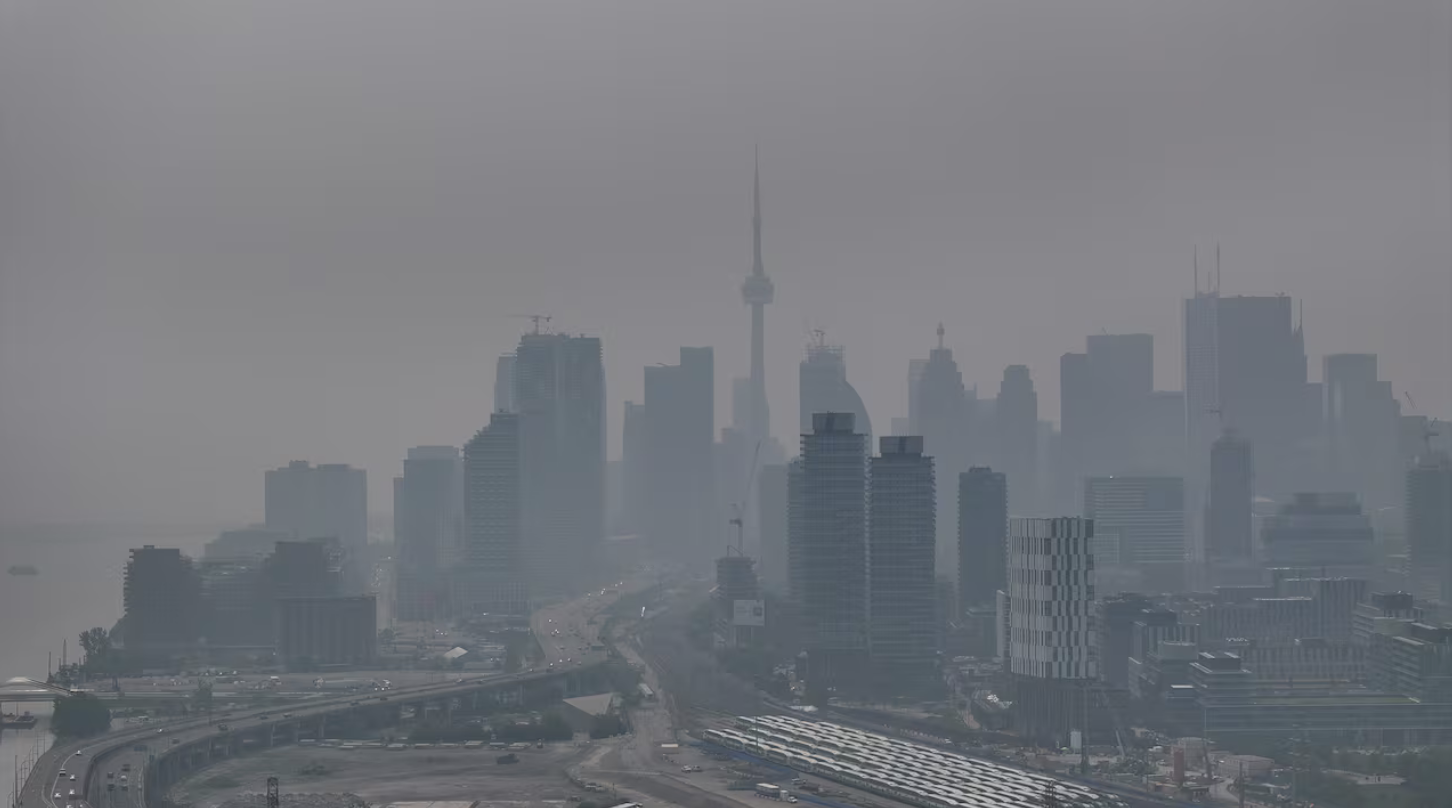
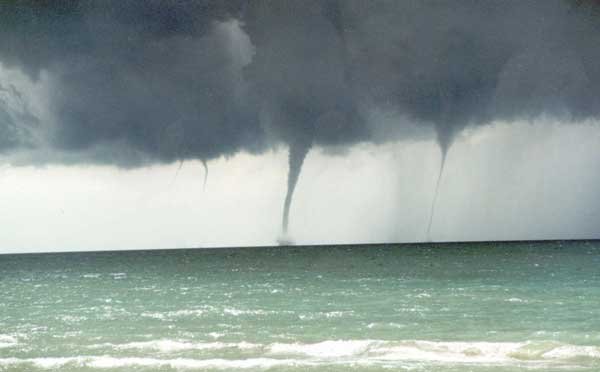
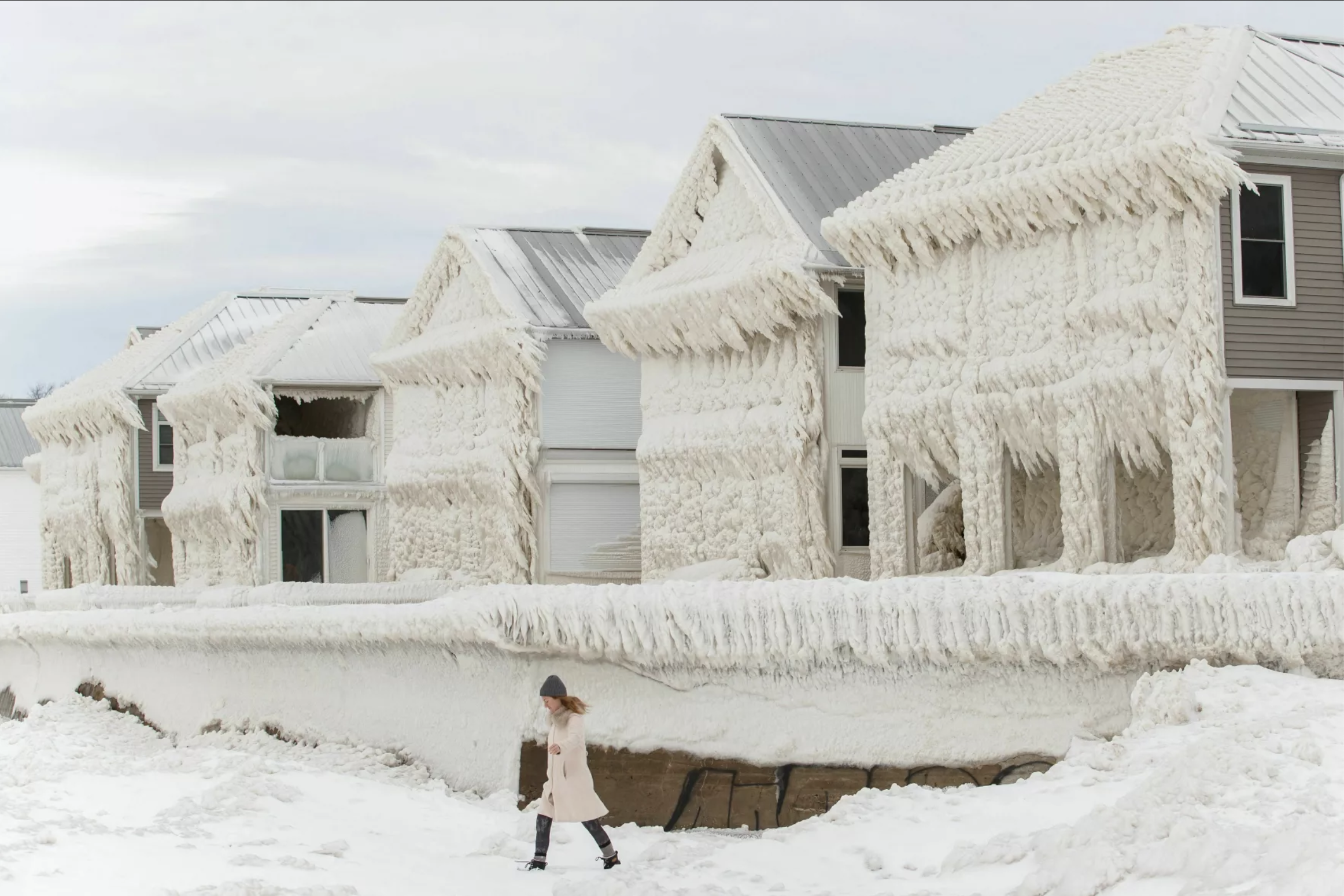
While provincial temperatures are generally mild due to the aforementioned surrounding bodies of water, like any land mass natural disasters do happen from time to time. When they occur in Ontario, they usually take the form of rainstorms, thunderstorms, smoke, wildfires, tornadoes, lake spouts, hurricanes, ice storms, severe squalls, and blizzards. Fun fact: Southwestern Ontario is known in Canada to have the most lightning strikes per year. It’s average? 792 hours–that’s 33 days!–of thunderstorm activity.
CITY LIVING
In terms of population, Ontario’s size was measured in 2026 at 16,136,480 residents. Of this population an approximation of 53% live in one of two cities: Toronto and Ottawa.
TORONTO
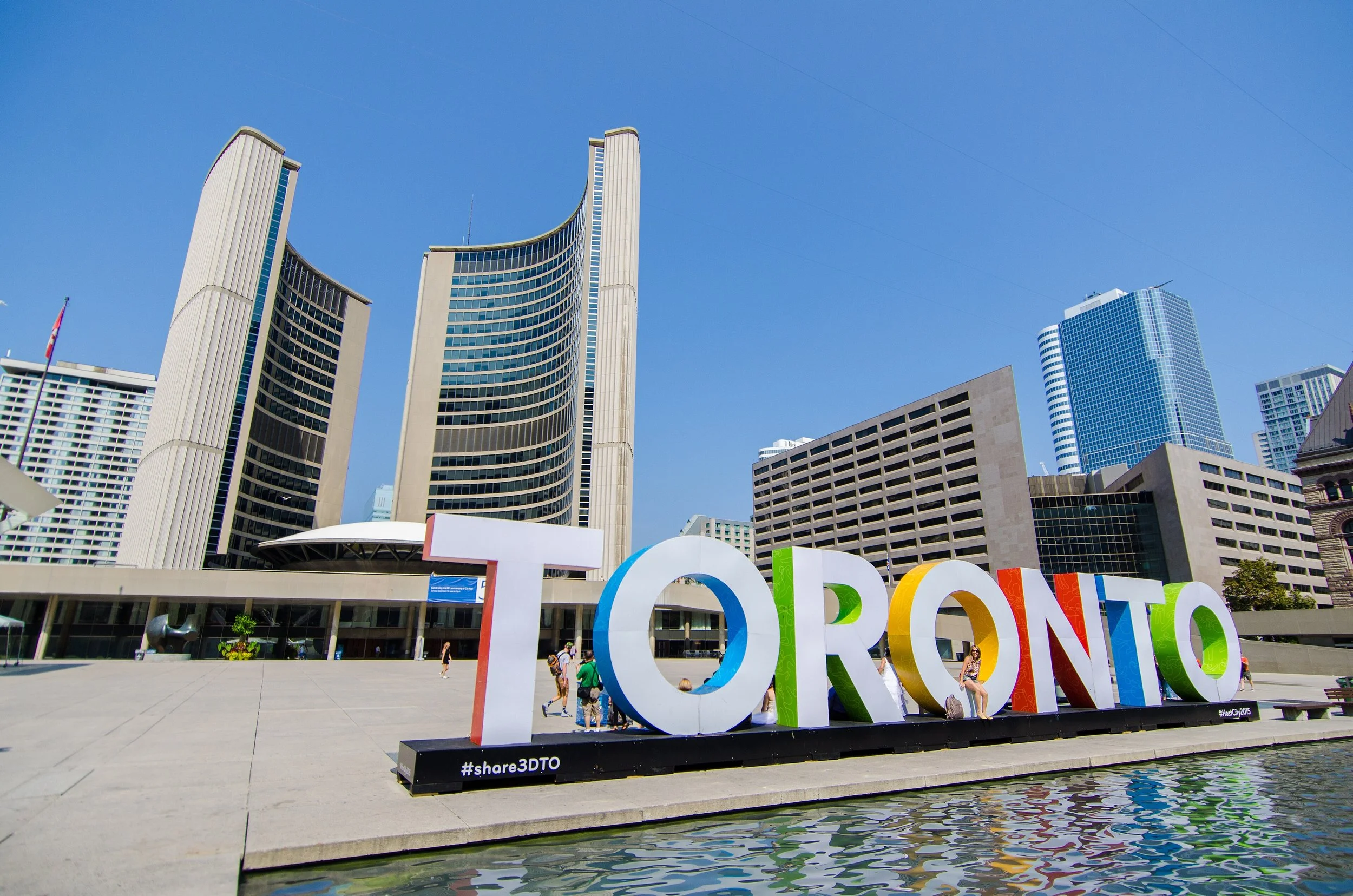
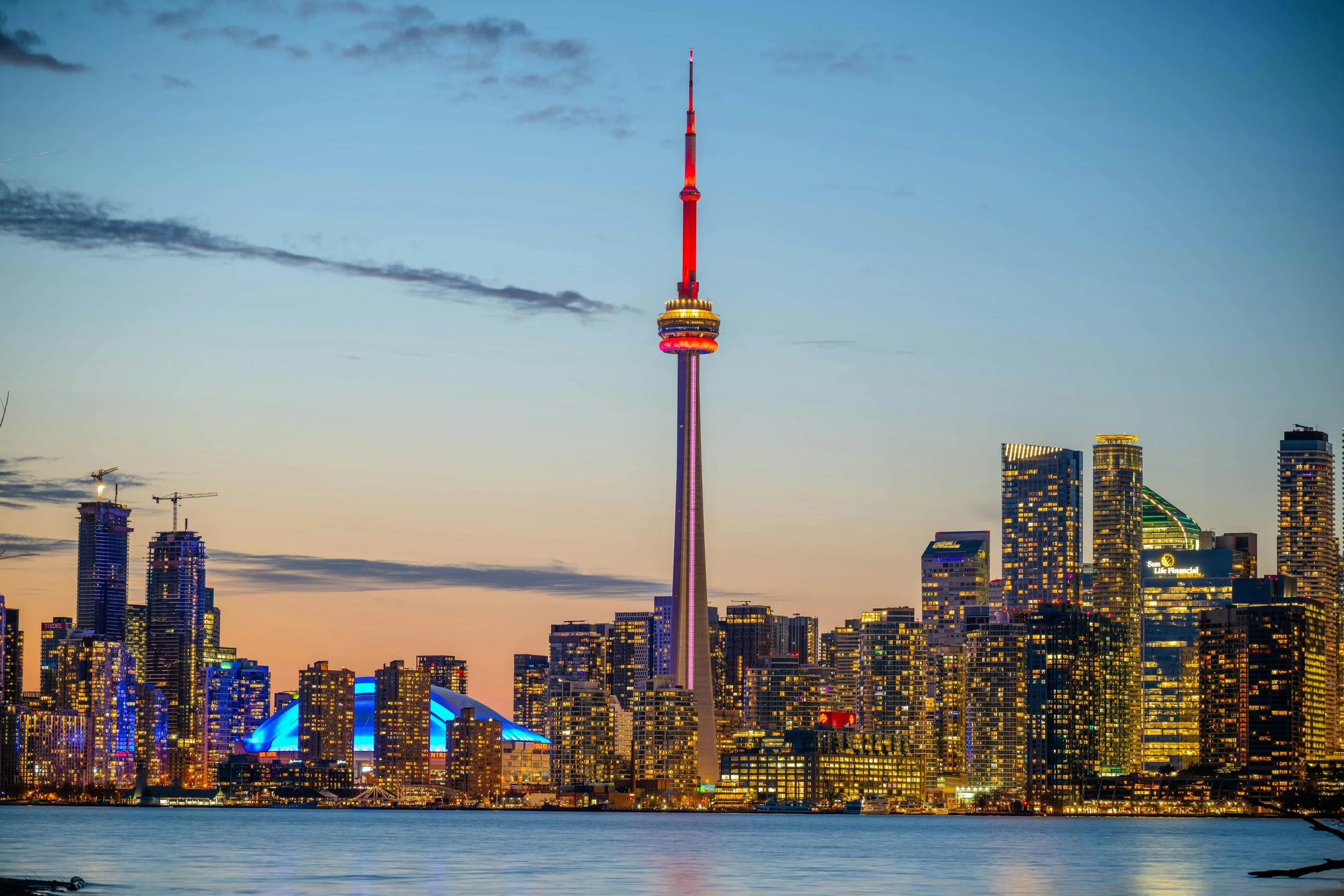
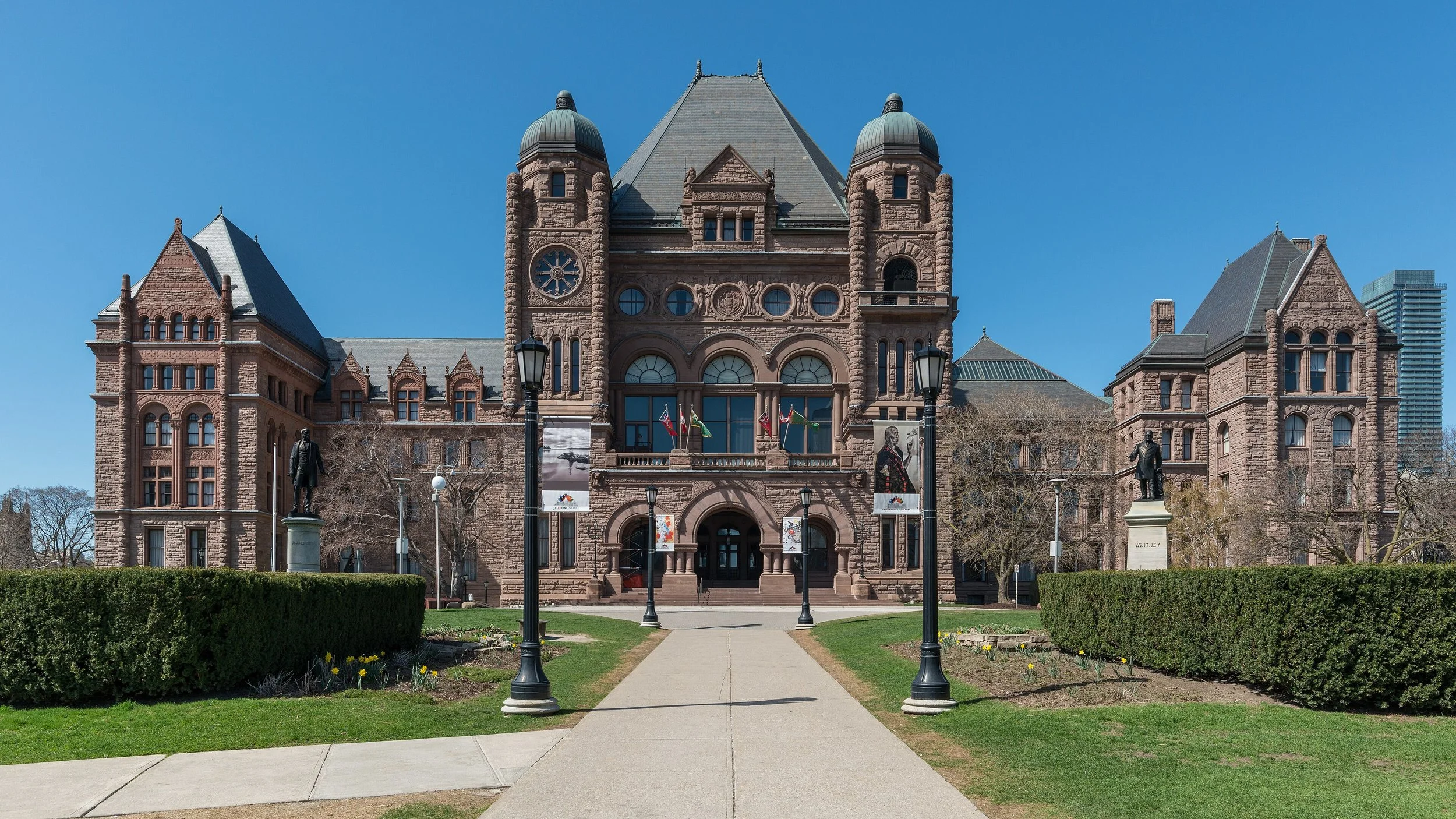
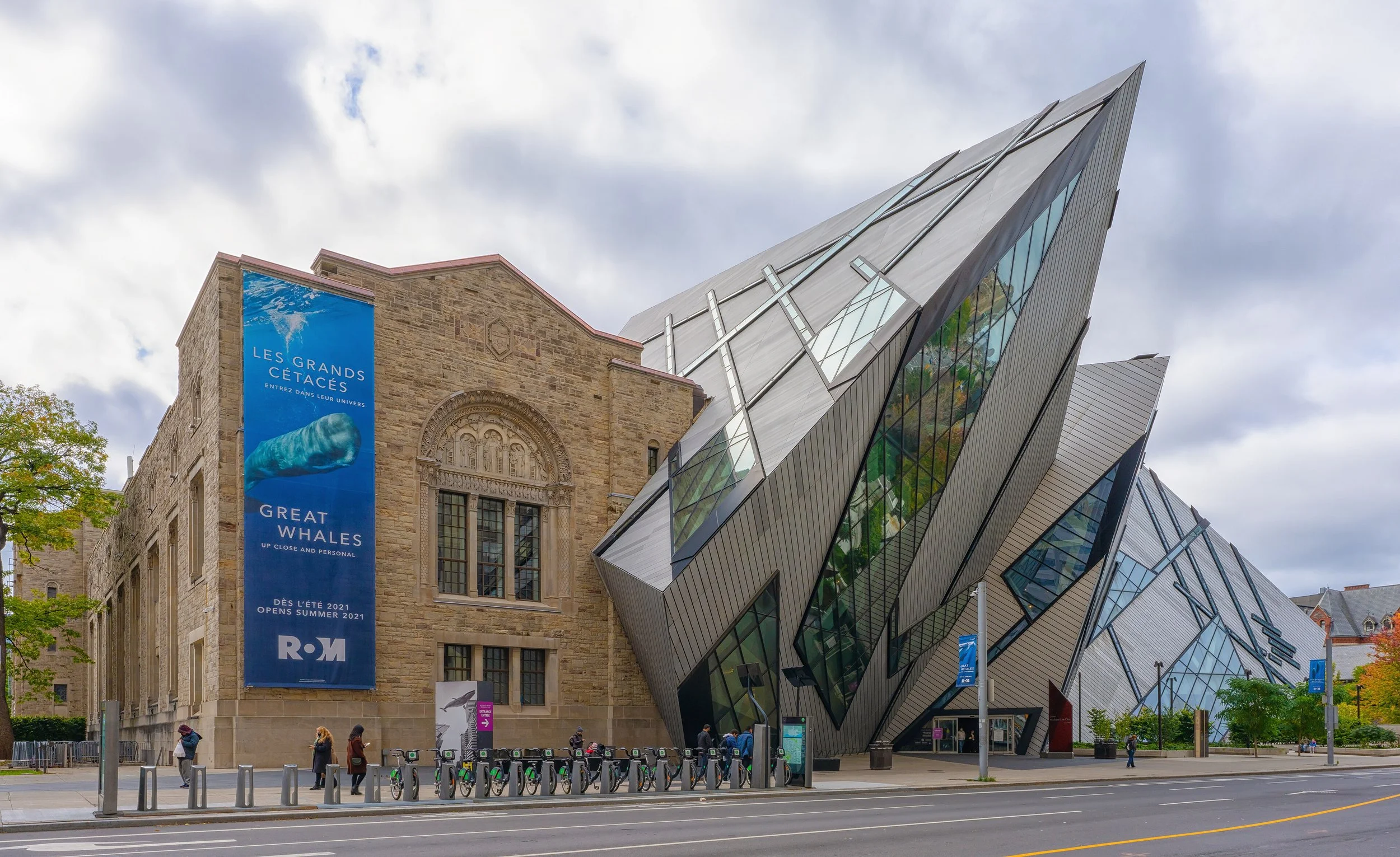
Commonly mistaken as the capital city of Canada, Toronto is actually the capital city of Ontario. Located on the coast of a Great Lake whose moniker is the namesake of the province, this city gets its name from a Mohawk word, tkaronto, meaning “tree in the water there,” a reference to the channel situated between Lakes Couchiching and Simcoe, a historical location for the modern-day city. This Indigenous name remains to be an alternative name for Toronto, as a decolonization movement continues to shape Canadian culture and society. Other common names for the city include: “the Six” (also written as “the 6” or “the 6ix”), in reference to the six municipalities that joined the City of Toronto in the late 1990s; “Broadway North,” for being the third largest Anglophone theatre district in the world behind London, England and New York City, USA; “Toronto the Good,” a name that references its history as a centre for Victorian morality in the 1800s, though nowadays it is often used in jest; “the America of Canada,” primarily used by Canadians located outside of Toronto to describe the city’s positive and negative parallels to American society; and, among other alternative names, “YYZ,” the official code used to refer to the primary airport of the city, Toronto Pearson International Airport.
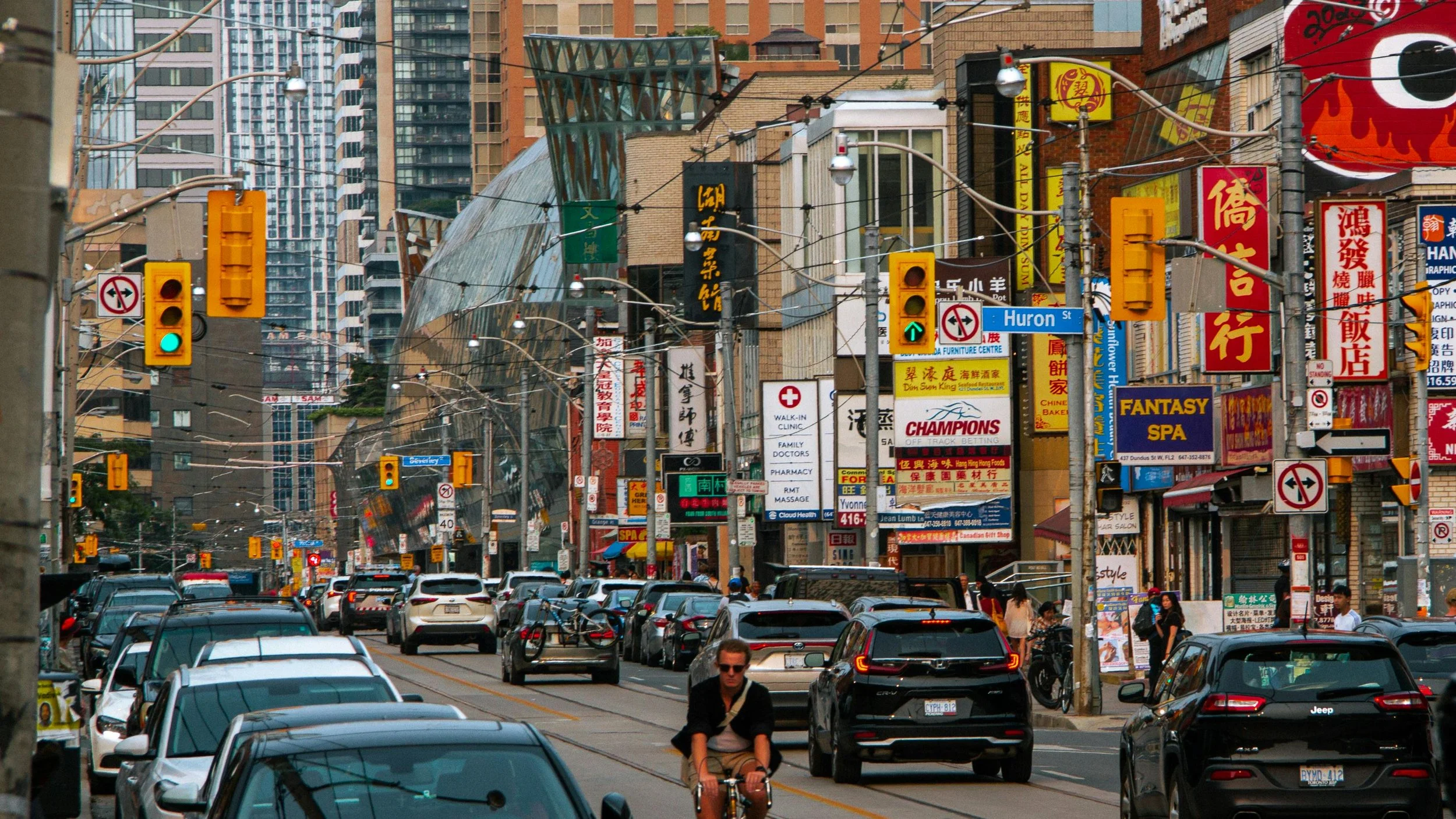
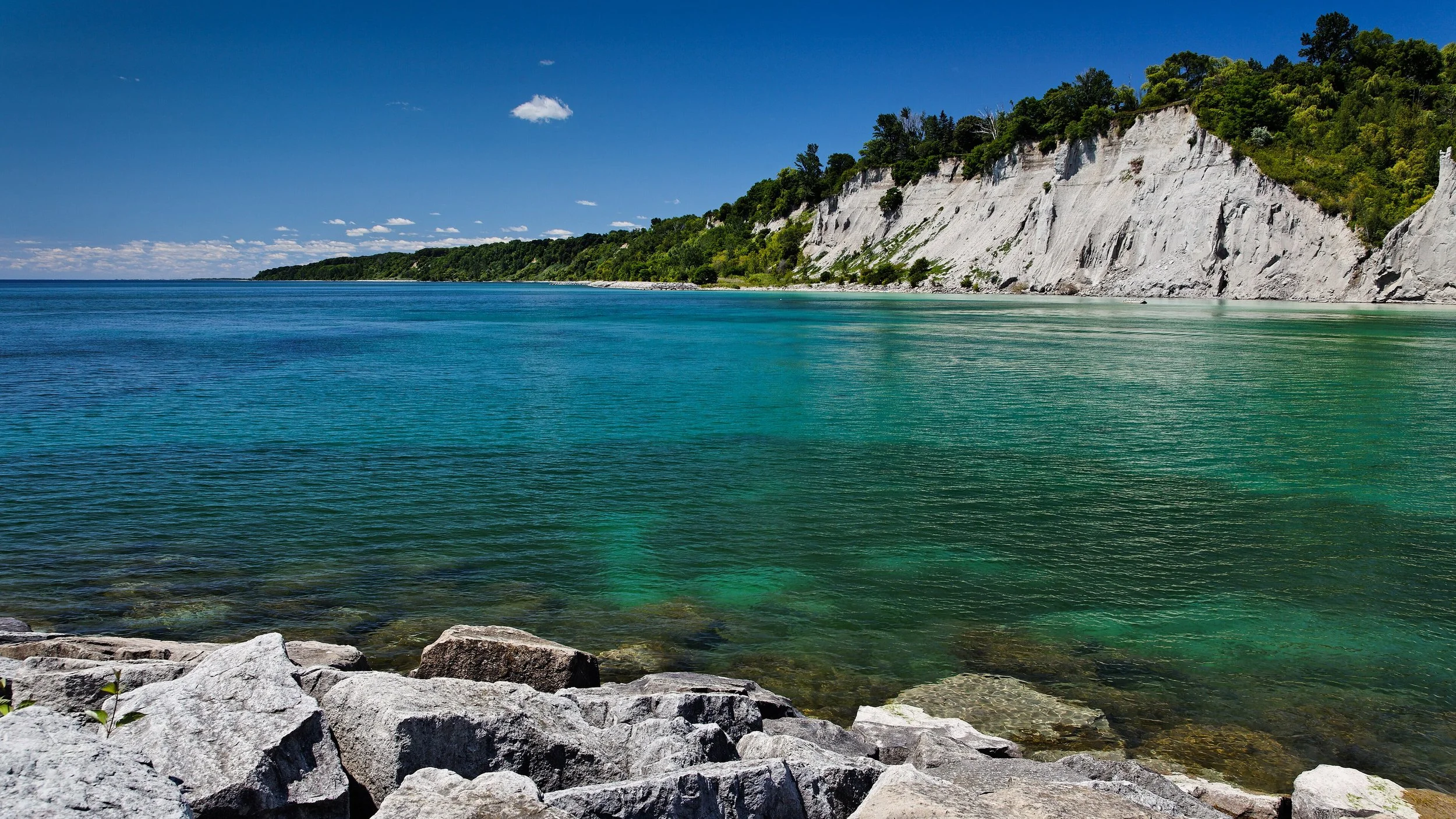
Beyond Toronto’s various names, is the city’s international reputation. Statistically known as the most multicultural city in the world, with a representation of more than 250 distinct ethnicities, 190 spoken languages, and more than half of its 7.1 million residents coming from other countries, Toronto is a diverse locale where both Canadian residents and international citizens flock. In addition to it being the largest city of Canada, as well as the fourth largest city in North America after Mexico City, New York City and Los Angeles, Torontonians never lack when it comes to things to do. Some common activities among locals include: attending a basketball game of Canada’s only NBA team, the Toronto Raptors; cheering on the city’s NHL team, the Toronto Maple Leafs, at a home hockey game; jamming out to major musical artists on tour at Roger’s Stadium; checking out the latest movies at the Toronto International Film Festival(AKA TIFF); exploring the multitude of diasporic neighbourhoods scattered across the city, such as Chinatown, Little Italy, Little India, Little Jamaica, Koreatown, Greektown, Portugal Village, Little Poland, Little Tibet, among many more; and decompressing in Toronto’s Beaches neighbourhood by walking down a lakeside boardwalk, soaking up the sun on the sand, or swimming in the vast waters of Lake Ontario.
OTTAWA
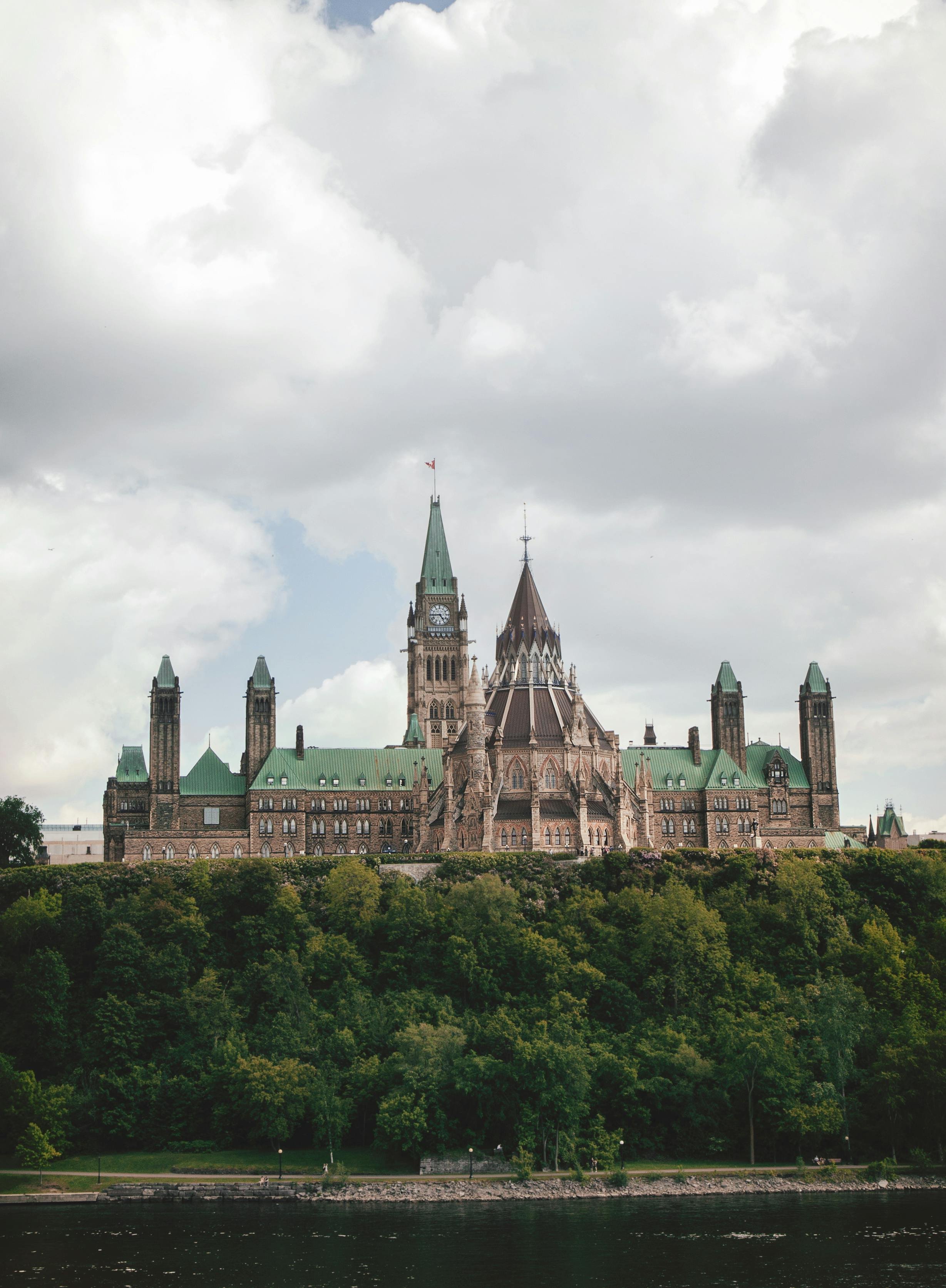
Another well-known city in Ontario is Ottawa, the actual capital city of Canada, just a four-and-a-half-hour drive from Toronto. The origin of this city’s name is Algonquin and refers to the local river of the same moniker (Ottawa River), which means “to trade,” an allusion to the Indigenous economic roots of the land. Nicknames of Ottawa include: “Bytown,” the former name of the city before “Ottawa” was officially chosen in 1855; “OTT” or “O-Town,” affectionate abbreviations typically used by local residents; “Government City,” a reference to it being the home of the federal government of Canada; and, among others, “The Town That Fun Forgot,” a sardonic exaggeration made by Canadians that comments on the city’s apparent lack of local interest outside of politics.
Despite Ottawa indeed being the political centre of the country, the city does have other notable qualities. With a population of 1,097,760 city dwellers (as of 2024), with an additional 309,193 residents (as of 2026) commuting back and forth from the city’s attached urban neighbour of Gatineau, Quebec, local activities objectively vary: touring through green space; watching live music at local cafés and bars; browsing through the myriad of art galleries and museums that dot the city; taking part in the many Indigenous and Francophone events available throughout the year; and attending the city’s various annual festivals, such as the country’s largest Canada Day celebration, the ever-colourful Canadian Tulip Festival, or Winterlude, which takes place on and around a frozen Rideau Canal, Earth’s longest ice rink and a UNESCO world heritage site.
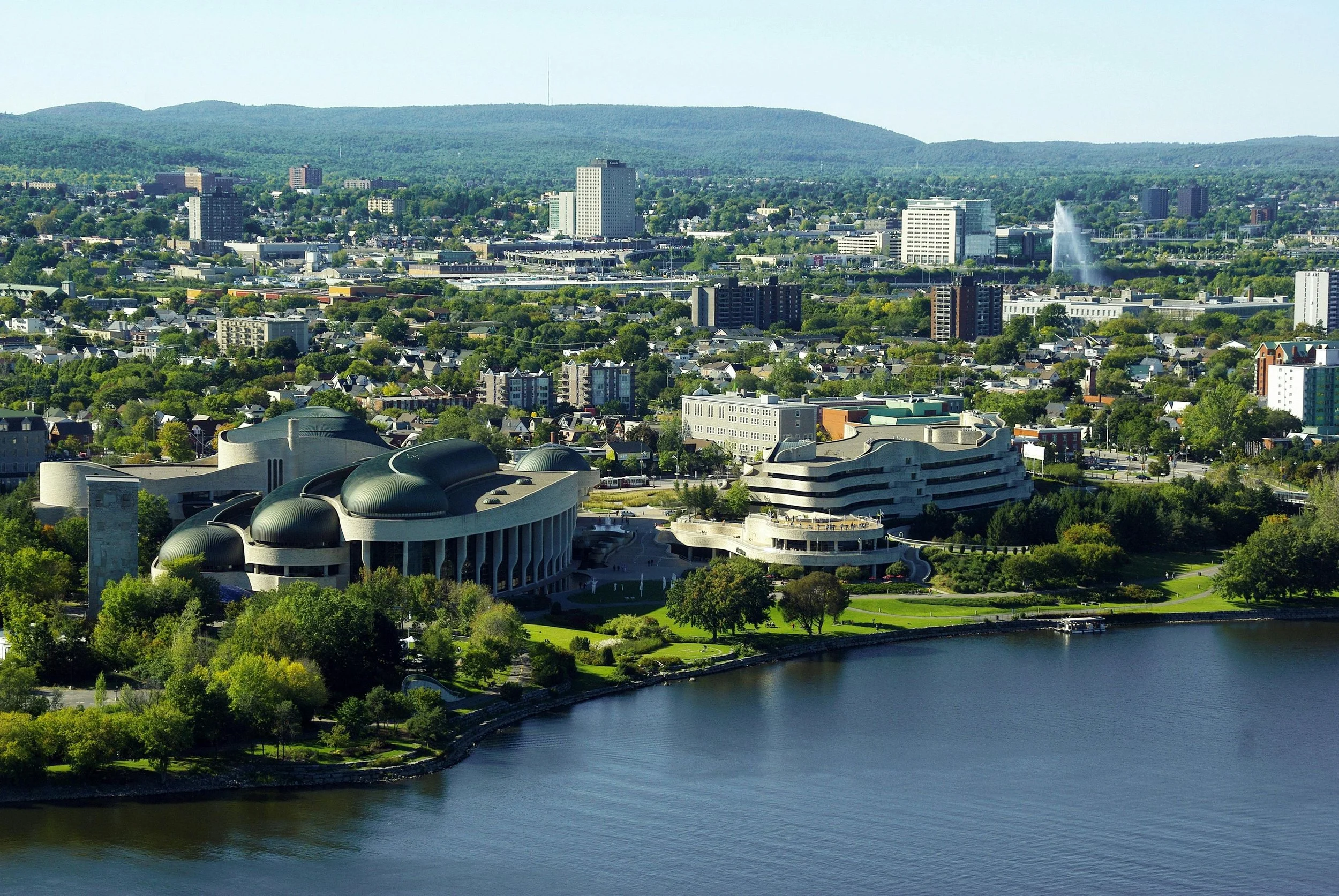
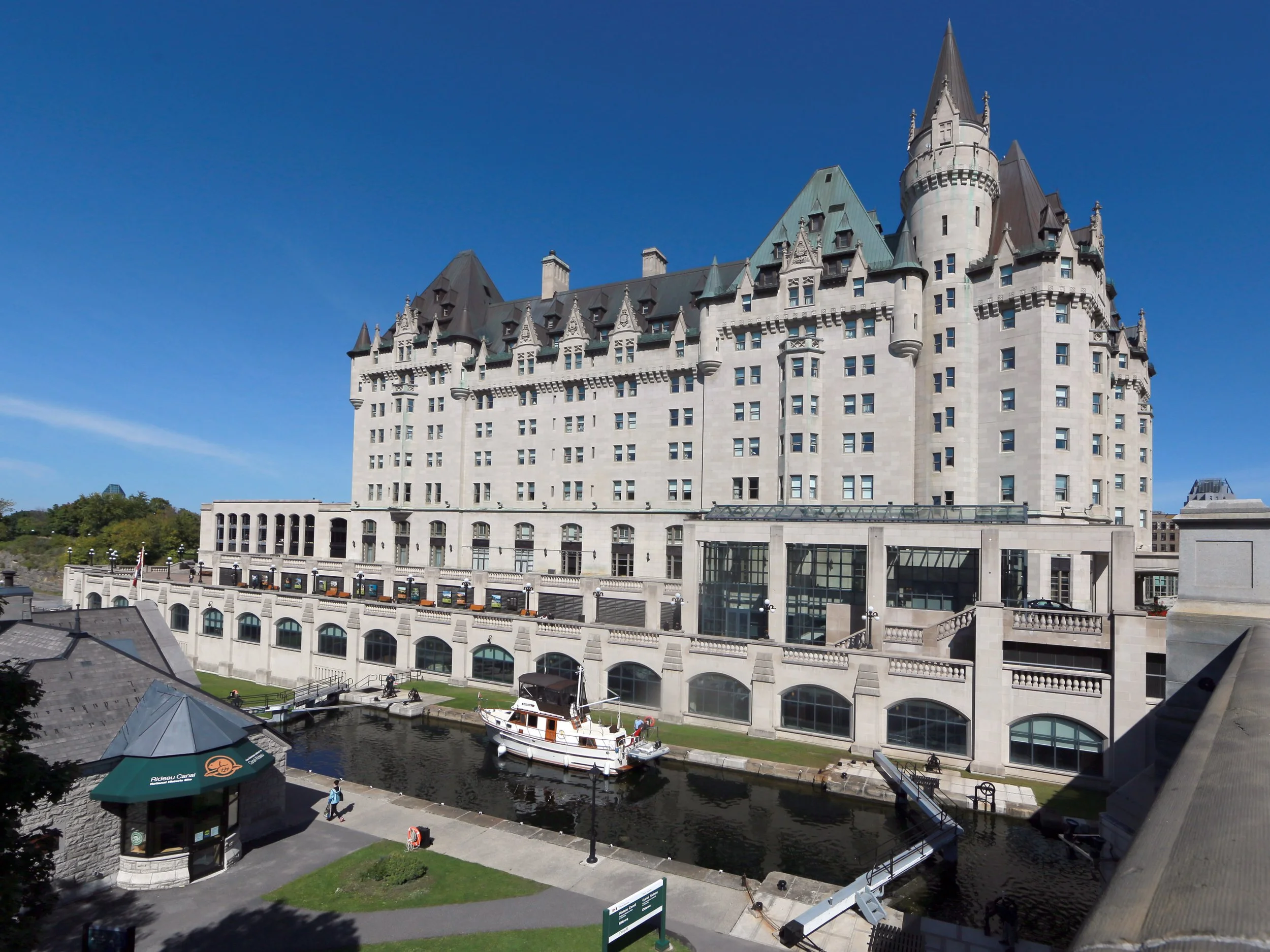
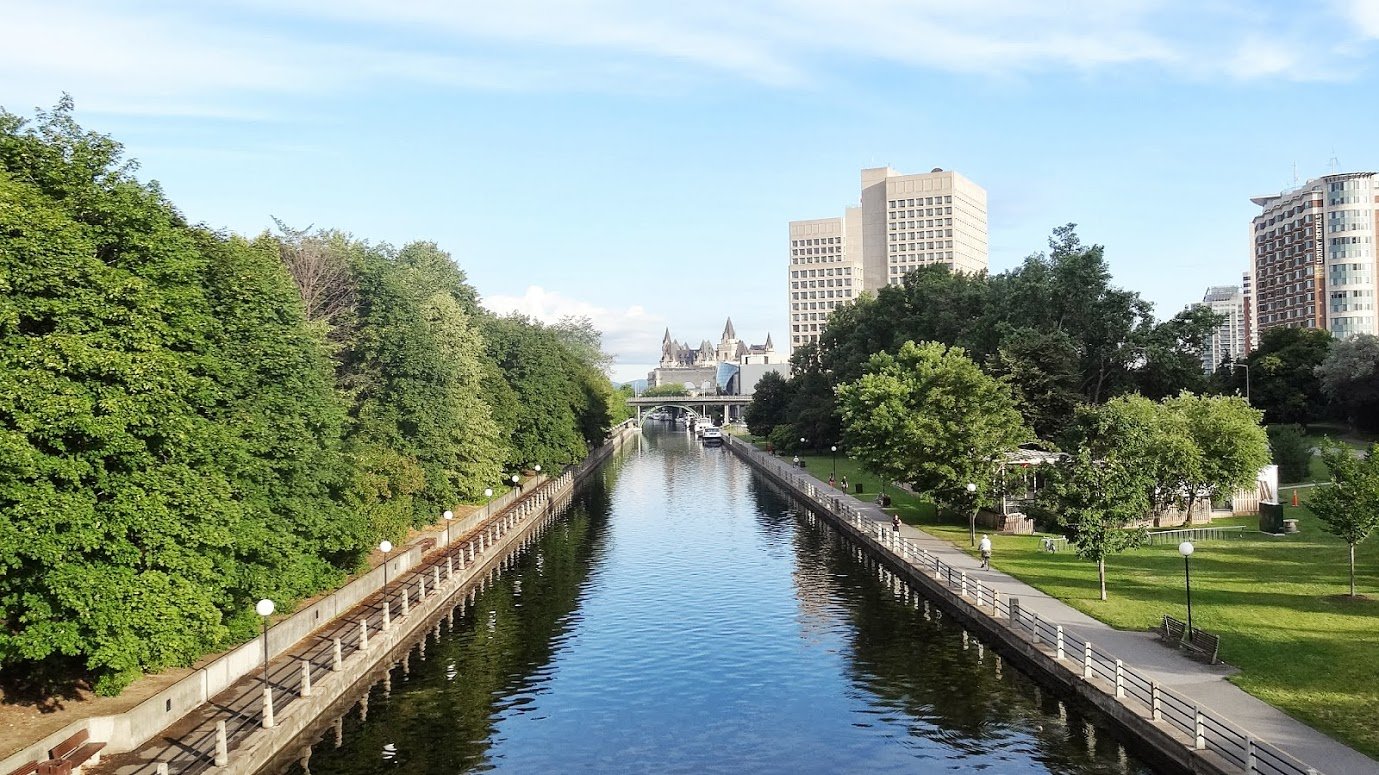
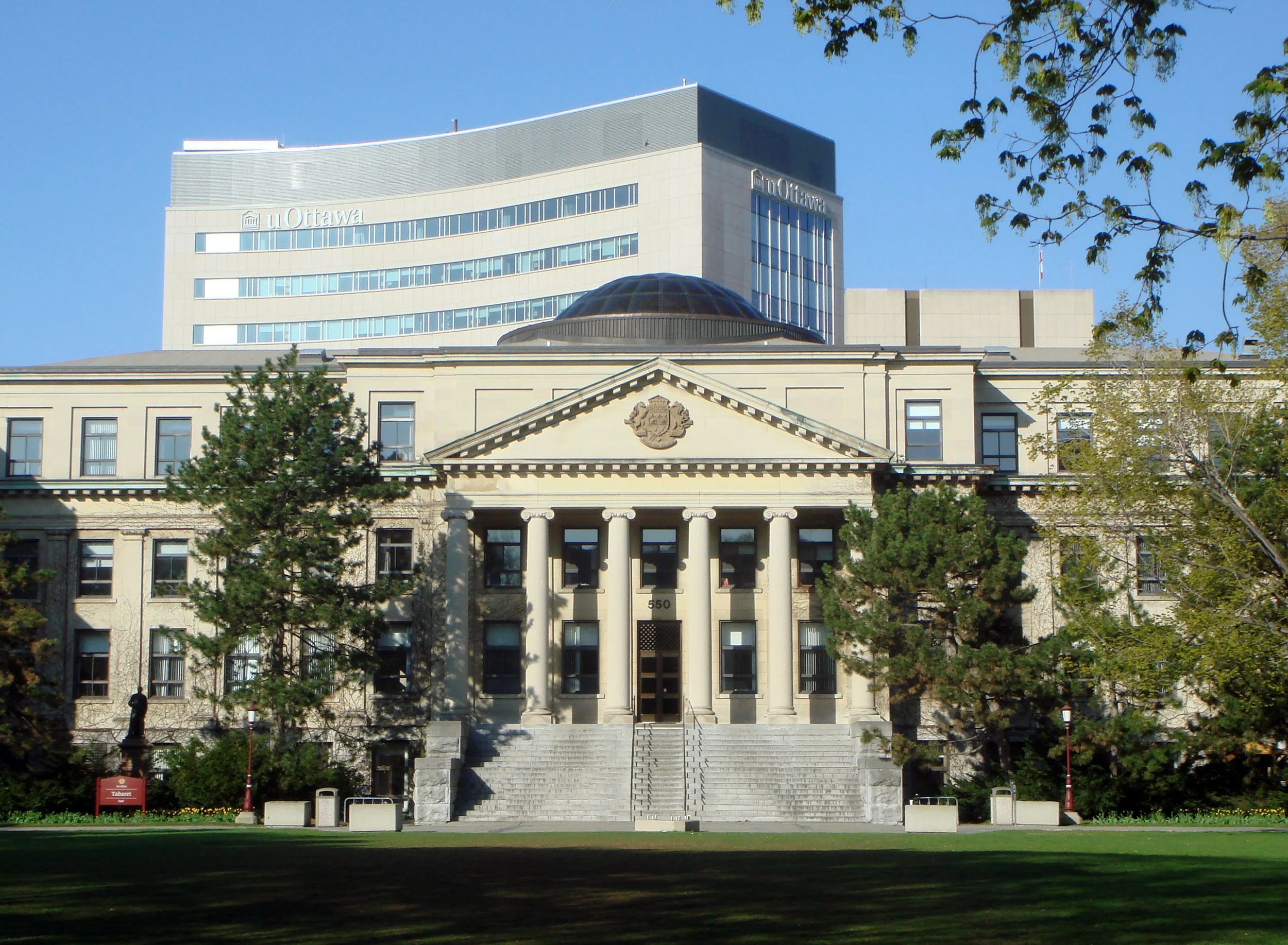
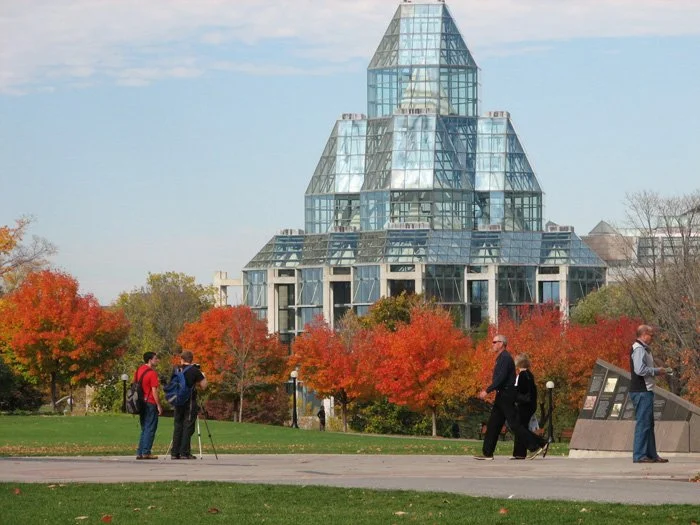
Other notable towns and cities in Ontario include: Mississauga, known for being the home of Canada’s busiest airport; London, nicknamed “Forest City” for its multi-millions of trees growing in the area; Kingston, the city where Ontario’s oldest public market is located; Sault Ste. Marie, a centuries-old city divided by two countries, Canada and the USA; and, among many others, Niagara-On-The-Lake, whose international reputation has dubbed it the honeymoon capital of the world.
TOURISM
CN TOWER
Most large Canadian cities have a CN Tower, but Toronto is the only one whose CN Tower holds a world record: tallest freestanding structure on Earth (1976-2007, surpassed by the Burj Khalifa, UAE) and in the Western Hemisphere (1976-present).
At 553.3 metres in height, the Toronto CN Tower hosts a list of activities for both domestic and international tourists, alike: immersing yourself in the underwater habitats of 20,000+ sea creatures at Ripley’s Aquarium of Canada (located at the tower’s base), which just so happens to be the country’s largest aquarium and home to North America’s longest underwater tunnel; riding the high-speed glass elevator to the interior observation deck for an unforgettable aerial view of the city; indulging in the fine cuisine served at the 360-degree-view restaurant of the tower; and, among others, risking the EdgeWalk, a tethered promenade atop the tower’s main pod, 116 storeys above the ground.
CASA LOMA
A castle constructed from 1911-1914, which currently serves as a home museum, vintage car exhibition, a popular Hollywood filming location, and various other attractions.
NIAGARA FALLS
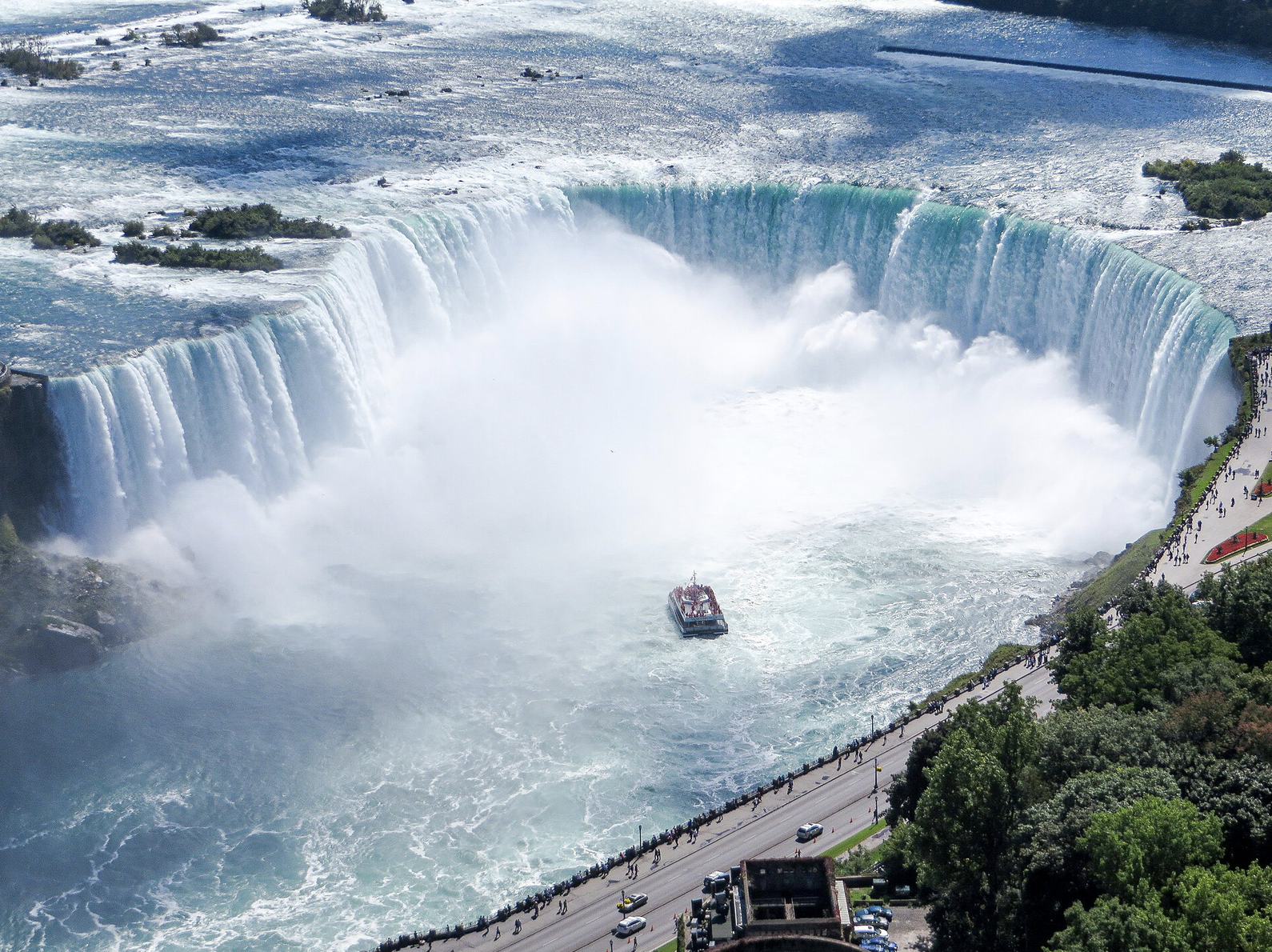
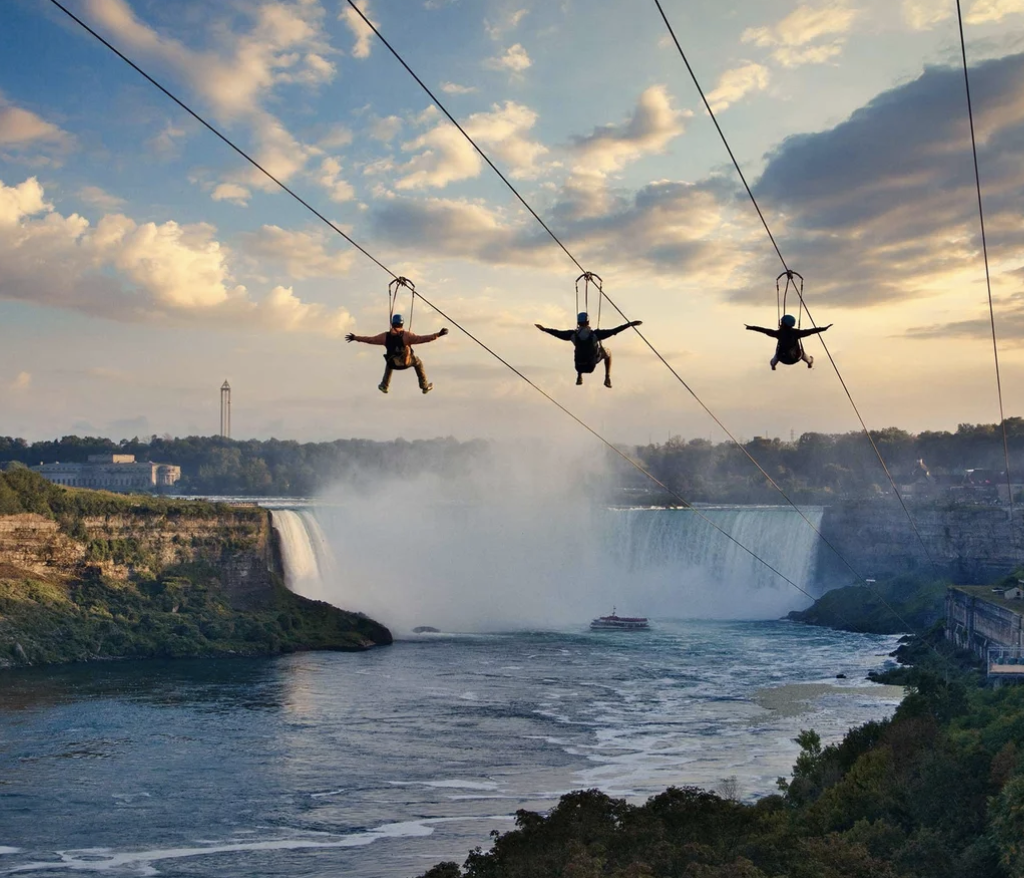
Niagara Falls is a transnational set of waterfalls situated between Canada and the United States of America. On its Canadian side, tourists from around the globe gather to observe the beauteous power of its rushing waters, either by staying stood at a distance from up above or by venturing up-close by boat down below.
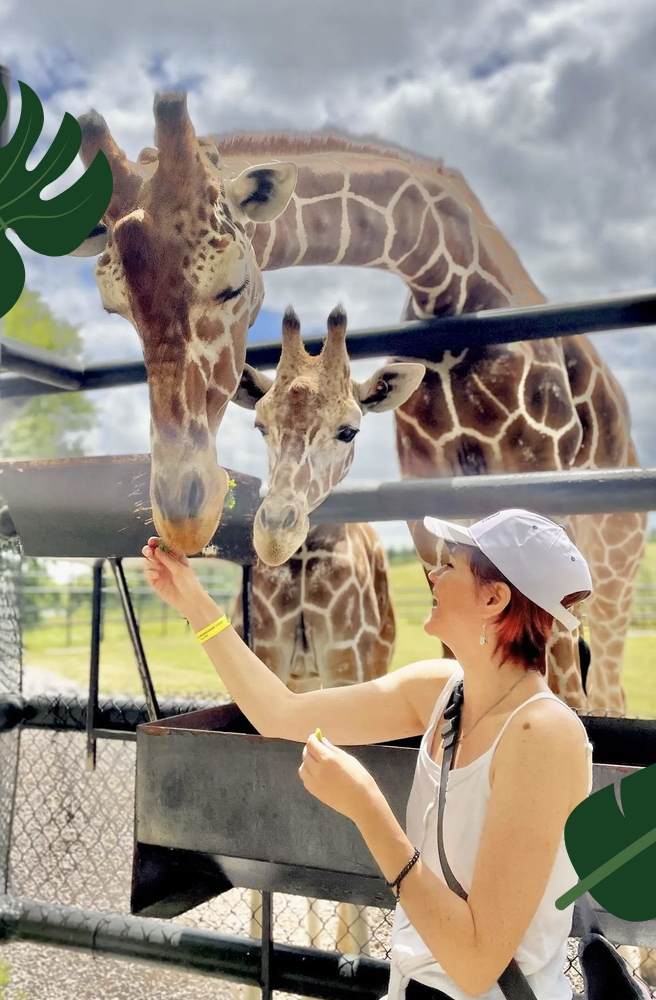
In addition to the local lake and waterfalls, the city serves as a sort of “Las Vegas” of Canada, featuring casino resorts, horseracing, live shows, shopping, golf courses, waterparks, themeparks (African safari zoos, adventure parks, seasonal attractions, etc.), and much more.
TOBERMORY
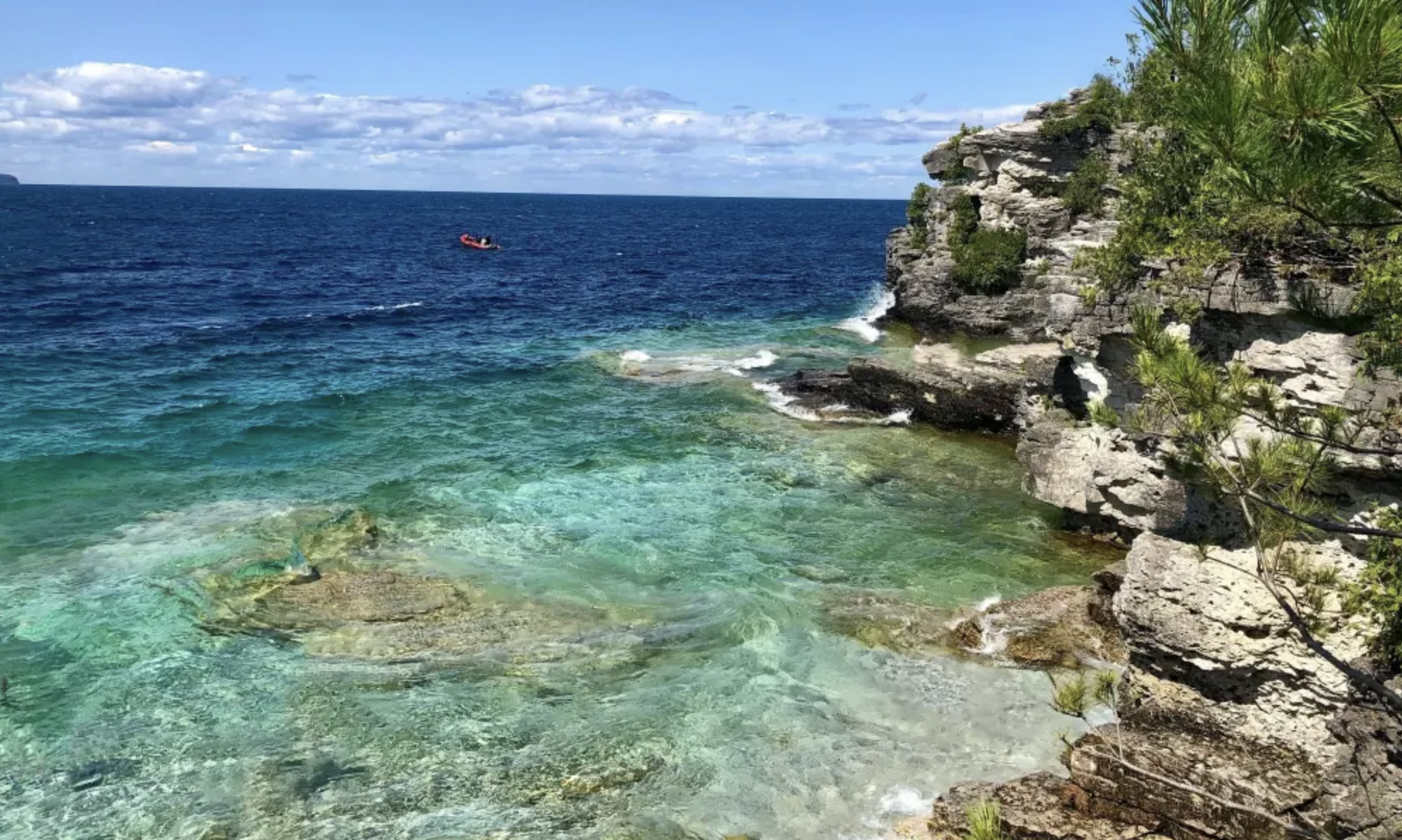
Located in Bruce Peninsula National Park near Five Fathom National Marine Park in Lake Huron, Tobermory is a destination of local wonder. There are virtually endless activities to do there: taking in the outstanding views of turquoise waters and rugged cliffs while hiking the internationally famous 700-km Bruce Trail; visiting Flowerpot Island, home to lush forests, explorable grottos and caves, and curious limestone formations in the shape of giant flowerpots; exploring ancient shipwrecks via scuba diving or transparent boat rides; stopping by Manitoulin Island, the world’s largest freshwater island, for an Indigenous-led experience horseback riding and spending the night in traditional tipis; and learning first-hand the breathtaking reason Tobermory is dubbed the “Dark Sky Haven” of Ontario: with minimal light pollution, actively combatted by the local community, Tobermory is the ideal Ontarian locale for incredible stargazing, meteorshower watching, and Northern Lights observation.


ECONOMY
Clearly, the diverse array of tourism offered by Ontario is one of the province’s biggest incomes. However, it does not solely rely on this draw. Other important exports, either nationally or internationally, include: media (local and across-border film, music, publishing, etc.), information and communication technologies, unwrought gold and silver, piston engine vehicles, motor vehicle body parts and accessories, aircraft body parts, pharmaceuticals, and more.
As for the province’s most in-demand professions: Registered Nurses, Personal Support Workers, Construction Project Managers, Welders, Software Developers and Programmers, Industrial Electricians, Cybersecurity Analysts, Data Analysts, Transport Truck Drivers, and the list goes on….
EDUCATION
Such a variety of economic sources can only be made possible by having an adequate amount of qualified workers to fulfill professional roles. Like anywhere in Canada, most companies in Ontario require the completion of a post-secondary education program, which 57.5% of the province’s residents have successfully done (as of 2021). This compares to the national average of 57.2% (as of 2021).
Regarding the institutions that educate the Ontario public, there are famously many: University of Toronto (Toronto, ON), known for its consistent high ranking among global universities for its excellence in research, namely in Medicine, Engineering, and Business; York University (Toronto, ON), sought after for its reputable Business and Law programs; University of Waterloo (Waterloo, ON), applauded for its world-leading innovations and technologies in the Engineering, Computer Science, and Mathematics sects; Wilfrid Laurier University (Waterloo, ON), renown for its strong programming in Social Work and Music; and, among countless others, University of Ottawa (Ottawa, ON), famed for being the largest bilingual university in Canada (English/French), offering among the best programs of Law, Medicine, and Bilingual Studies.
DEMOGRAPHICS
Ontarians are a diverse group of persons whose ethnic roots are planted in a myriad of locations across the globe, but one would be remiss not to mention the Indigenous roots of the land, which is just as diverse as its immigrant communities. Some of the most populous First Nations groups include: Algonquin, Iroquois, Cree, Ojibwa, Odawa, Potawatomi, Delware, Mohawk, Oneida, Onondaga, Cayuga, Seneca, and Tuscarora. Regarding immigrant groups: India, China, Philippines, Jamaica, Trinidad and Tobago, Pakistan, Italy, United States of America, Iran, Guyana, South Korea, Syria, Nigeria, and Ghana. In addition to these peoples are the Franco-Ontarians who, in some regions of Ontario, cover up to 21.3% of the local populous.
With so much cultural diversity inevitably comes much linguistic diversity. While English is the official language of Ontario, French is an officialized minority language, which exists alongside the many other tongues commonly spoken in the province: Mandarin, Hindustani, Spanish, Punjabi, Arabic, Italian, Tagalog, Portuguese, Tamil, and Persian, among others. As for Indigenous languages, which represent around 2.9% of Ontario’s linguistic population, the most spoken are Ojibway, Oji-Cree, Cree, Mohawk, Cayuga, Oneida, and Anishinaabemowin.
FOOD
When such a multitude of cultures collide, a gastronomic fusion is inevitably born. Like the majority of regions in Canada, residents of each area regularly consume food from around the globe, often indulging in a variety of countries’ cuisines in just one day without even realizing it. While most cuisines are accessible across the country, the diet of each province or territory is generally informed by its local diversity. This is why the following beverages and foods are commonly drunk or eaten in Ontario:
Bagged Milk
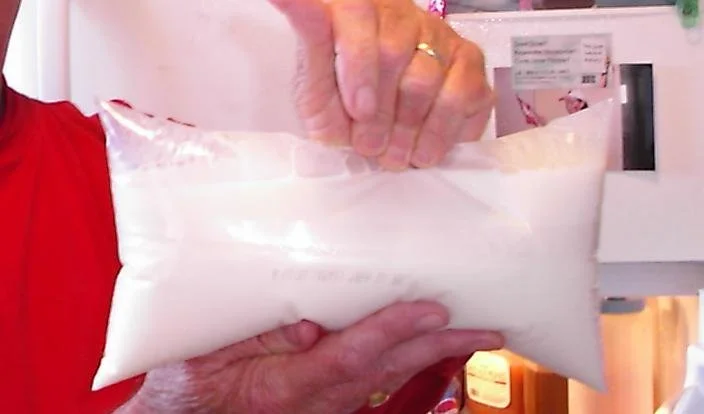
Canada has developed an international reputation for selling its milk in plastic bags instead of bottles, cartons, or jugs. This reputation is misrepresentative of the country, however, as cartons and jugs have actually been the most common method of milk distribution in the nation for multiple decades. In fact, bagged milk sales are generally limited to specific areas of Ontario, Quebec, and the Maritime provinces, and this milk packaging is not the only variety available there; milk is typically sold in cartons and jugs alongside bags of milk in the dairy section of grocery stores in Eastern Canada, and these cartons and jugs are more often than not the only type of packaging currently available for milk in the rest of Canada (British Columbia, Alberta, Saskatchewan, Manitoba, Yukon, Northwest Territories, Nunavut). Despite this, it is a beloved tradition by some in Ontario to consume bagged milk.
Peameal Bacon
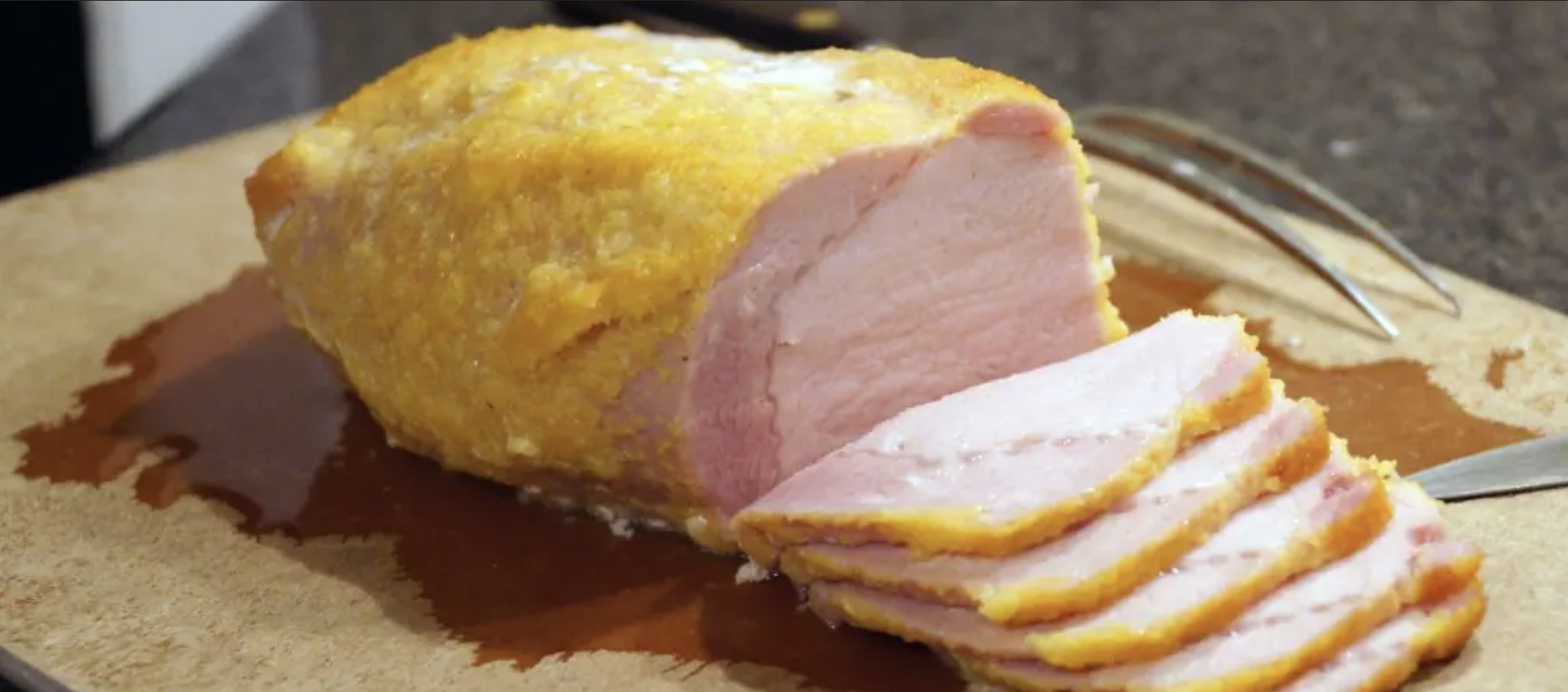
Peameal Bacon is a thick slice of pork loin, generally cut from the back of the pig, that is traditionally rolled in ground yellow peas. It is often fried and eaten for breakfast or lunch in the form of a side to eggs and toast, or as the meat to a sandwich. While this meat comes from Ontario, it is commonly eaten across Canada.
Mennonite Sausage
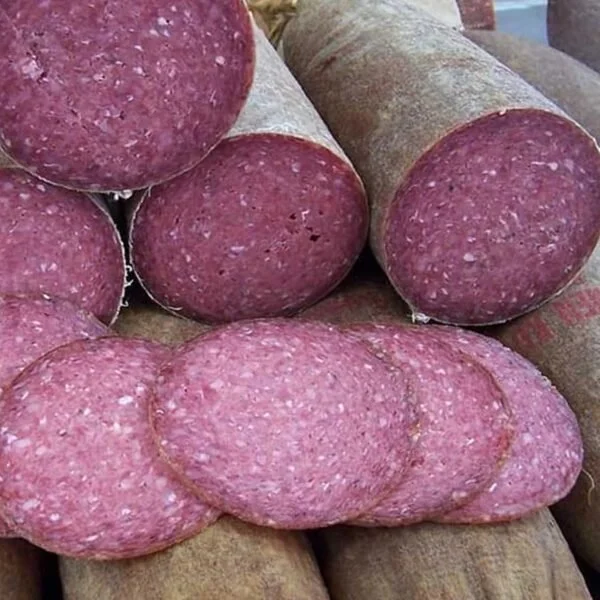
Mennonite is an ethno-religious people group common to Canada. While many foods are borne from this culture, Mennonite Sausage is a popularly enjoyed food in Ontario. Traditionally, this cured sausage consists of simple ingredients: pork, salt, and pepper (and sometimes smoke). Many Canadians synonymize this meat with “Summer Sausage,” as it generally does not require refrigeration and, therefore, can be packed as a ready-made protein for summer activities like hiking, camping, picnics, and more.
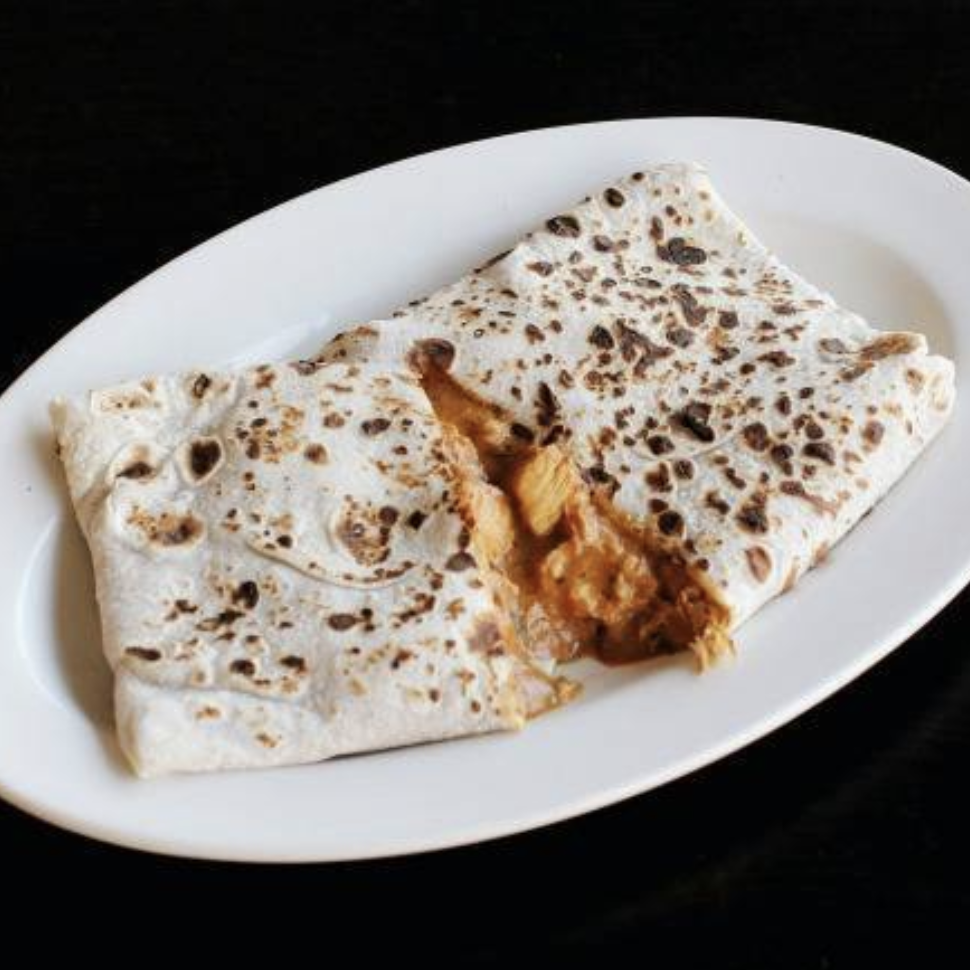
East Indian Roti
Served as a snack or meal, East Indian Roti is the ultimate food fusion. Originating in countries such as Trinidad and Tobago, Guyana, and Suriname in response to the influence of these nations’ communities descending from India, the concept of this food was brought over to Canada and was further refined by its local diasporic cultures of North India and Pakistan.
In Ontario, East Indian Roti can generally be described as an unleavened bread stuffed with curry, vegetables, and meat. Due to the nature of its appearance and the popularity of Tex-Mex, Mexican, and Arab dishes in the province, some Ontarians may equally refer to East Indian Roti as a type of curry burrito, soft taco, or pita (e.g., butter chicken burrito, butter chicken [soft] taco, butter chicken pita). This informal terminology can also be heard in other parts of Canada, such as Vancouver.
Canadian Classic Pizza
Alternatively known as Windsor-style pizza–a callback to its small-town Ontario roots–Canadian Classic Pizza serves as an iconic part of Canadiana.
This pizza type generally features toppings such as pepperoni, bacon, mushrooms, and cheese, though some modern variants may additionally include ham and/or maple syrup.
Hawaiian Pizza
Speaking of pizza, you can thank Ontario for one of the Internet’s most debated topics: “Should pineapple go on pizza?”
Known as “Hawaiian Pizza” in Canadian English, this popular pizza consists of ham, pineapple, and cheese.
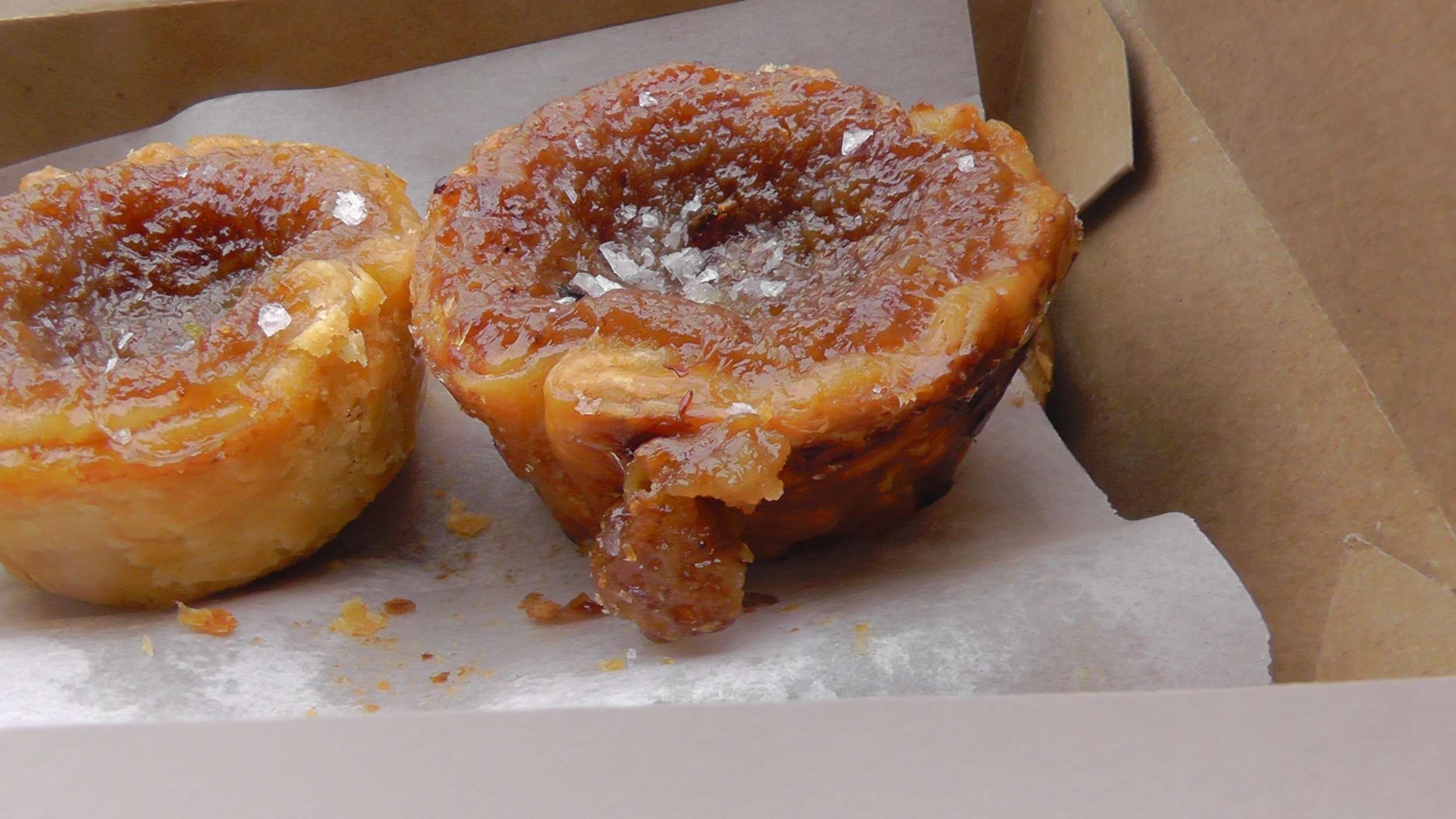
Butter Tarts
These miniature pies can be found at virtually every bakery across Canada, though it was Ontario where they first appeared. If you haven’t seen them, try looking for them during a holiday season, especially that of Thanksgiving or Christmas.
Traditionally speaking, butter tarts are an approximately palm-sized pastry with a gooey filling made of butter, brown sugar, eggs, syrup (typically corn or maple), sometimes cream, and some debatable (if you know, you know) mix-ins: raisins or pecans.
Beaver Tails
You can’t spell Canada without Beaver Tails (what?).These uber popular pastries are commonly found at BeaverTailsrestaurants in touristic destinations across the country, like Toronto and Ottawa. Similar to a dessert pizza, they consist of an oblong deep-fried dough on which there are a variety of toppings added. Some common options are cinnamon sugar (the Classic!), chocolate hazelnut spread with peanut butter sauce and Reese’s Pieces, apple pie filling with caramel sauce, and maple butter with course maple sugar and chocolate sauce.

SOURCES
ATTRIBUTION
“Canadian Shield, Ontario” image courtesy of Jonathan Wilkins - Own work, CC BY-SA 3.0, Wikimedia Commons
“Horseshoe Falls, Ontario” image courtesy of Thomaswm - Own work, CC BY-SA 4.0, Wikimedia Commons
“Eau Claire Gorge, Northern Ontario” image courtesy of P199 - Own work, CC BY-SA 3.0, Wikimedia Commons
“Lake Erie, Southern Ontario” image courtesy of Hgjudd - Self-published work by Hgjudd, CC BY-SA 3.0, Wikimedia Commons
“Canada Goose” image credited to Larry D. Moore, CC BY 4.0, Wikimedia Commons
“Bald Eagle” image credited to Peter K Burian - Own work, CC BY 4.0, Wikimedia Commons
“Wintered North American Opossum” image credited to Cody Pope, CC BY-SA 2.5 Creative Commons, via Wikimedia Commons
“Bobcat” image credited to Becker1999 (Paul and Cathy) - Flickr, CC BY 2.0, Wikimedia Commons
“Racoon” image credited to Rhododendrites - Own work, CC BY-SA 4.0, Wikimedia Commons https://commons.wikimedia.org/w/index.php?curid=122621802
“Northern Leopard Frog” image credited to Brian Gratwicke - Flickr, CC BY 2.0, Wikimedia Commons
“Monarch Butterfly” image credited to Kenneth Dwain Harrelson, CC BY-SA 3.0, Wikimedia Commons
“Fox Squirrel” image credited to USFWS Mountain-Prairie - Fox Squirrel, Public Domain, Wikimedia Commons
“Smoke, Toronto” image credited to Patrick Morrell/CBC
"Water Spouts, Lake Huron” image credited to National Oceanic and Atmospheric Administration - Public Domain, Wikimedia Commons
“Ice Storm, Fort Eerie” image credited to Cole Burston / AFP Via Getty Images on WWNO.org
"Skyline of Downtown Toronto” image credited to Héctor Berganza from Pexels
“Ontario Legislative Building” image credited to DXR - Own work, CC BY-SA 4.0, Wikimedia Commons
“Casa Loma” image credited to Larry Koester - Casa Loma, CC BY 2.0, Wikimedia Commons
“Famous Toronto Sign at City Hall” image credited to Jeff Hitchcock from Seattle, WA, USA - Nathan Phillips Square, CC BY 2.0, Wikimedia Commons
“Royal Ontario Museum” image credited to Maksim Sokolov (Maxergon) - Own work, CC BY-SA 4.0, Wikimedia Commons
“Scarborough Bluffs” image credited to Benson Kua, CC BY-SA 2.0, Wikimedia Commons
“Chinatown, Toronto” image credited to Jason D from Pexels
“Rideau Canal” image credited to Suwannee.payne - Own work, CC BY-SA 3.0, Wikimedia Commons
“Parliament of Canada Buildings” image credited to Tetyana Kovyrina from Pexels
“Château Laurier” image credited to John A. Brebner - Own work, CC BY-SA 3.0, Wikimedia Commons
“National Gallery of Canada” image credited to Public Domain, Wikimedia Commons
“University of Ottawa” image credited to RobCA - Own work, Public Domain, Wikimedia Commons
“Ottawa-Gatineau” image credited to Photo by Pixabay from Pexels
“Salted Butter Tarts” image credited to Alex Lozupone - Own work, CC BY-SA 4.0, Wikimedia Commons
“Sushi Pizza” image credited to Quinn Dombrowski from Berkeley, USA - Sushi pizza, CC BY-SA 2.0, Wikimedia Commons
“Butter Chicken East Indian Roti” image credited to Uber Eats
“Mennonite Summer Sausage” image credited to Misty Creek Homestead
“Bagged Milk” image credited to Jakemaheu at en.wikipedia - Transferred from en.wikipedia; transferred to Commons by User:Superm401 using CommonsHelper., Public Domain
“Sweet Corn” image credited to Public Domain, Wikimedia Commons
“Canadian Classic Pizza” image credited to Flavour Network
“Shipwreck Exploration, Tobermory” image credited to tourism of Tobermory
“Northern Lights, Tobermory” image credited to tourism of Tobermory
“Tobermory Coast” image credited to tourism of Tobermory
“Safari Niagara Themepark” image credited to Safari Niagara
“Sunset Ziplining At the Falls” image credited to WildPlay
“Chokecherries” image credited to Government of Ontario
“Balsam Fir Needles” image credited to Government of Ontario